Best China Printed Circuit Board Assembly Companies?

Choosing among the Best China Printed Circuit Board Assembly Companies requires more than comparing quotations. A low unit price can hide setup fees, long material lead times, or limited inspection. A capable partner should explain its process clearly, from component sourcing and solder-paste printing to reflow profiling and final testing. Ask for evidence: sample inspection records, defect trends, and a clear account of how engineering changes are handled.

IPC president and CEO John W. Mitchell has emphasized workforce capability and manufacturing quality in public industry discussions. A concise paraphrase of that message is: “Reliable electronics manufacturing depends on skilled people and disciplined processes.” This is a paraphrase, not a verbatim quotation. It matters in Printed Circuit Board Assembly, where a small solder bridge or misplaced component can stop a finished product from working. The best suppliers do not merely promise quality; they show how they measure it.

This guide compares Chinese assemblers through practical criteria, including certifications, production scale, prototype support, traceability, and communication. It also considers whether a company can handle the board’s actual requirements, such as fine-pitch components, mixed technologies, or controlled testing. A polished website is not proof. Neither is a long client list. Request specifics, and check whether the answers match your design and volume.

There is room for judgment. A factory suited to a high-volume consumer device may not fit a small industrial run. And no checklist removes every risk. The goal is a reliable shortlist, built on verifiable details rather than confident sales language.

Best China Printed Circuit Board Assembly Companies?

What PCB Assembly Companies Do in China

China PCB assembly companies turn bare circuit boards and component lists into tested electronic assemblies. Their work often begins with a design review: engineers check footprints, component availability, soldering clearances, and panel layout before production. This can catch problems such as a connector placed too close to a board edge. It cannot guarantee a trouble-free product. Some design issues only appear after testing.

For assembly, automated machines place tiny surface-mount parts, while technicians may install larger or through-hole components. Reflow ovens melt solder paste in controlled temperature zones; inspection systems then look for shifted parts, bridges, or missing components. X-ray inspection can help assess hidden solder joints, especially under fine-pitch packages. Many facilities also offer electrical checks, firmware loading, and functional tests using customer-provided procedures. Details matter. A test report is useful, but it does not replace a clear agreement on acceptance criteria, traceability, and defect handling. Buyers should ask how changes are recorded and whether test coverage matches the intended use. A rushed prototype can reveal a process gap, not just a design flaw. And inspection is never perfect.

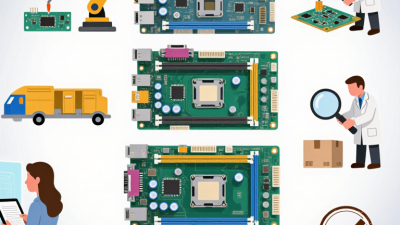
How China’s PCB Assembly Industry Is Organized

China’s PCB assembly industry is not one uniform factory network. It is organized around different production roles, order sizes, and engineering needs. Some facilities focus on rapid prototypes, where engineers may need a small batch within days. Others are built for repeat production, with automated SMT lines, stencil printers, reflow ovens, and inspection systems. A smaller group offers turnkey service, coordinating bare boards, components, assembly, and testing. The labels overlap. A prototype supplier may also handle regular orders, though its capacity and process controls should be checked.

Geography also shapes the work. Dense electronics supply chains can shorten sourcing and freight between board makers, distributors, and assemblers. Yet proximity does not guarantee a smooth build. Buyers can compare engineering support, component traceability, soldering capability, inspection methods, and communication. For a fine-pitch board, ask how solder paste and placement accuracy are checked. For a power board, ask about thermal checks and load testing. These details matter more than a broad claim of full service. A sourcing plan may look tidy on paper, then become awkward when one connector changes. That possibility deserves attention. Production fit is specific.

Criteria for Comparing PCB Assembly Providers

Comparing PCB assembly providers starts with the board itself. Share your Gerber files, bill of materials, and expected order volume, then ask how each provider checks manufacturability. Look for specific feedback on pad sizes, component spacing, and solder-mask clearance. “We can build it” is less useful than a clear list of risks and proposed changes.

Quality controls should be visible, not just promised. Ask how incoming components are verified, how solder paste is inspected, and what testing is available for your design. For a prototype, flying-probe testing may be appropriate; a larger run may need fixtures or functional testing. Request sample inspection records and traceability details. Small inconsistencies matter. A missing date code can complicate later fault analysis.

Compare lead times against the actual process steps, including component sourcing and rework. Ask who will report a shortage, and how quickly you will hear about a failed test. A low quote can hide setup fees or limited inspection. Still, a detailed scorecard is not perfect: it can reward paperwork over good judgment. Ask technical questions and listen for precise, candid answers. If a provider cannot explain a proposed substitute part, pause before approving it.

Notable China PCB Assembly Companies and Their Specialties

China’s PCB assembly sector includes several distinct types of suppliers. Large electronics manufacturing services providers often specialize in high-volume production, combining surface-mount placement, automated optical inspection, and functional testing on one production line. They may suit established products with stable designs and repeat orders. Ask how they handle component substitutions, because a small change can affect soldering settings or product reliability.

Other manufacturers focus on prototypes and small batches. Their strength is often quicker engineering feedback: a technician can flag tight component spacing, awkward test access, or unclear assembly notes before a design reaches volume. Some suppliers concentrate on industrial control boards, where connectors, heat, and vibration need careful attention. Others support medical or communications equipment, but capability should be verified through relevant quality records and process documentation. Ask for sample inspection reports, traceability details, and a clear account of testing. Useful details matter.

A company’s specialty is not proof of a good fit. Production capacity, engineering support, and quality systems vary by facility, even within the same supplier group. It is easy to overlook communication delays. Request a sample build and review the results with your own engineers before committing to larger orders.

How to Choose a PCB Assembly Partner for Your Project

Choosing a PCB assembly partner starts with matching its process to your board, not its sales pitch. Share the Gerber files, bill of materials, assembly drawings, and expected order volume. Ask how the team handles component substitutions and documents approval before making changes. A capable partner should explain its inspection steps, including solder-paste checks, automated optical inspection, and testing suited to your product.

Request evidence from a comparable build, such as a sample inspection report or a clear explanation of defect handling. Discuss traceability, material storage, lead times, and how production changes are communicated. If your board includes fine-pitch parts or connectors near the edge, ask how those details affect stencil design and inspection. A polished capability list is not proof. One weakness in many evaluations is relying on a successful prototype; repeatability at production volume matters too.

Tips: Send a small pilot batch before committing to a larger run. Compare the assembled boards with your drawings, check connector alignment, and review test results. Ask for the actual timeline, including sourcing and rework. Keep questions specific. It can feel slower at first, but unclear assumptions often cost more time later.

Best China Printed Circuit Board Assembly Companies? — How to Choose a PCB Assembly Partner for Your Project
Evaluation Dimension What to Check Evidence to Request Why It Matters
Project and process fit Confirm capability for your board type, assembly method, component package sizes, board dimensions, and production volume. Ask whether the project needs SMT, through-hole assembly, or both. Written capability limits; confirmation against your Gerber, BOM, assembly drawings, and expected quantities. A supplier’s general PCB assembly offering does not establish that its equipment and process are suitable for every design or order size.
Quality system and workmanship Check the quality-system certification that applies to the actual manufacturing site and the workmanship acceptance criteria used for your assemblies. Current certificate with site and scope; documented inspection and nonconformance procedures; agreed IPC-A-610 acceptance class and, where relevant, J-STD-001 requirements. ISO 9001 concerns a quality management system; it is not, by itself, a guarantee that every assembly will meet a particular workmanship requirement.
Inspection and testing Establish which checks are included, such as solder-paste inspection, automated optical inspection, X-ray inspection for applicable joints, in-circuit testing, or functional testing. Inspection and test plan showing applicable stages, coverage, acceptance criteria, test-fixture responsibility, and sample reports. Inspection methods detect different defect types. The right plan depends on board design, component packages, product risk, and available test access.
Engineering and NPI support Assess design-for-manufacturing feedback, BOM review, footprint and polarity checks, stencil planning, and support for first-article or pilot builds. Example redacted DFM report; defined engineering-review process; sample-build plan and approval checkpoints. Early review can identify manufacturing or documentation issues before they affect a larger production run.
Component sourcing and traceability Clarify who buys components, how approved sources are controlled, and how substitutions, date codes, lot records, and counterfeit-risk controls are handled. Written sourcing policy; approval process for alternates; component traceability records; notification and authorization procedure for any substitution. Traceability and controlled substitutions help manage supply-chain changes and support investigation of component-related issues.
Compliance and product requirements Identify the regulatory and industry requirements relevant to the end product. Verify material declarations and any sector-specific quality-system needs. Applicable compliance documents and their scope; material declarations where required; confirmation of whether additional standards, such as ISO 13485 or IATF 16949, apply to the project. Requirements vary by product and market. A certificate or declaration should be checked for validity, scope, and relevance to the manufacturing site and product.
Capacity, lead time, and delivery Request a schedule that separates material procurement, bare-board supply if included, assembly, inspection, testing, and shipping. Confirm capacity for repeat orders. Project-specific quotation and production schedule; assumptions on material availability, order quantity, expedite fees, and shipment terms. Lead time depends on the BOM, component availability, board complexity, order quantity, and requested tests; compare quotations using the same assumptions.
Communication and change control Check how the supplier handles engineering questions, revision changes, approval of deviations, production status, and corrective actions. Named project contacts; document-revision controls; escalation route; written change-approval and corrective-action procedures. Clear communication helps prevent builds from using outdated files or unapproved component and process changes.
Quotation and total cost Compare setup charges, tooling or stencil costs, test-fixture costs, component pricing, inspection scope, shipping, duties, and payment terms. Itemized quotation with exclusions, validity period, yield or rework assumptions, and terms for excess or obsolete materials. The lowest unit price may not represent the lowest total project cost if required tests, tooling, logistics, or sourcing risks are excluded.

Selection note: There is no universally best assembly partner. Compare suppliers against the same design files, quantity, acceptance criteria, test requirements, and delivery assumptions, then verify claims for the specific production site.