Best Flexible Circuit Board Manufacturer in China?
Finding the best flexible circuit board manufacturer in China depends on how well its capabilities match your design. A strong supplier should explain materials, production steps, tolerances, and inspection methods clearly. Ask how it controls copper thickness, bend radius, coverlay alignment, and connector reinforcement. These details can affect fit, reliability, and performance in a moving assembly. Request sample inspection records and a written explanation of how design questions reach engineering staff. Specific answers matter. Vague promises do not.
Compare manufacturers using the same drawing, specifications, and sample requirements. Check whether their stated capabilities suit your layer count, line spacing, order volume, and expected use. Ask how they verify electrical continuity and inspect finished boards. If certifications are relevant, confirm their scope and validity instead of relying on a logo alone. A site visit or documented quality review may reveal how work is handled beyond the sales presentation. Small details count, such as clear labels on sample panels and consistent responses to revision notes.
No single factory is best for every project. A supplier may offer competitive pricing yet need more support with prototypes or design changes. That trade-off deserves a closer look. Discuss lead times, revision handling, packaging, and communication before placing an order. A careful comparison helps buyers identify a manufacturer that can make a Flexible Circuit Board to specification and support the project as it develops. The choice is rarely perfect; honest questions can make it more dependable.
What Is a Flexible Circuit Board?
What Is a Flexible Circuit Board?
A flexible circuit board, or flex PCB, is a thin electronic circuit built on a bendable polymer film, commonly polyimide. Copper traces carry signals and power between components, much like wiring on a rigid board. The difference is physical: a flex circuit can fold, curve, or fit into a narrow space. Think of the hinge area in a compact device, where a flat, ribbon-like circuit moves with the structure. It is not simply a rigid board made thinner.
Flex circuits can reduce cable connections, save space, and support lighter product designs. They also need careful engineering. Repeated bending, sharp folds, or poor strain relief can damage copper traces over time. Grand View Research estimated the global flexible printed circuit board market at about USD 20.5 billion in 2023, reflecting wide use across electronics. Market growth, however, does not guarantee a suitable design or reliable production. Material choice, copper thickness, bend radius, and testing still matter.
Tips: Ask a manufacturer for the recommended bend radius and flex-cycle test conditions. Share a drawing that shows where the circuit bends, not just its flat outline. Check whether the prototype matches the intended assembly space. A small detail, like a connector position, can complicate installation. I would verify these points early; it is easy to underestimate how much a real hinge or enclosure changes the design.
How Are Flexible Circuit Boards Manufactured?
Flexible circuit boards are manufactured by building conductive copper patterns on thin, bendable dielectric films, often polyimide. The process starts with a circuit layout and a material stack-up chosen for bend radius, heat, and electrical needs. Details matter. A sharp fold can crack copper, even when the drawing looks sound.
Copper is cleaned, coated with photoresist, and exposed through a patterned image. Unwanted copper is etched away, leaving the traces that carry signals. Holes for component connections may be drilled or laser-cut, then plated with copper. The panel is rinsed between steps. Small residue can cause trouble.
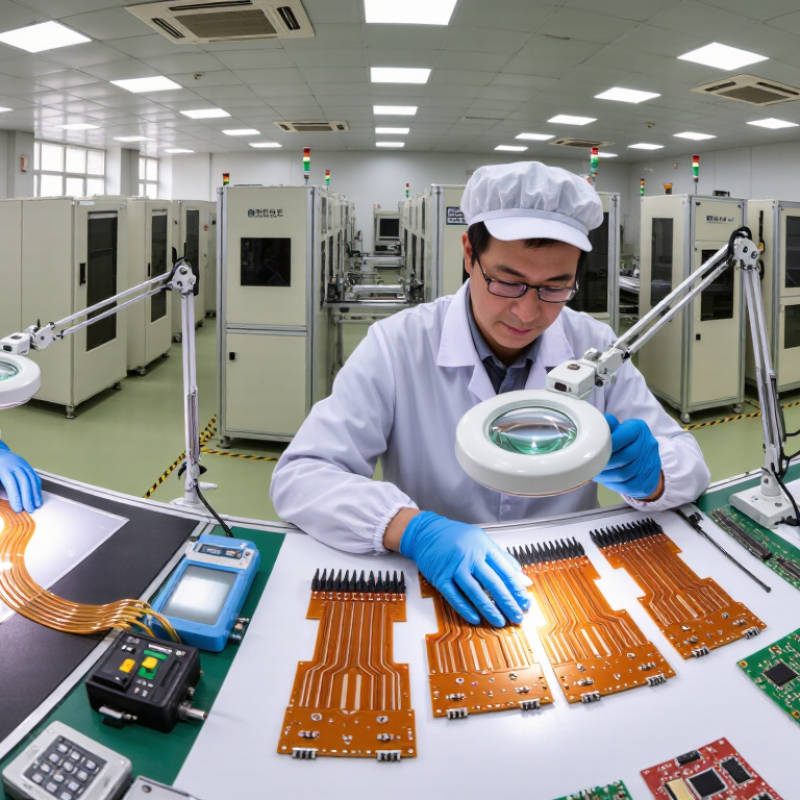
A protective coverlay is aligned over the circuitry and bonded with heat and pressure. Stiffeners may be added beneath connector areas to support insertion. Manufacturers then check dimensions, continuity, insulation, and visual defects. A sample can pass electrical testing yet still crease too easily during assembly, so bend testing matters. Inspection records and process controls help make results repeatable, though no single test captures every real-world use. Careful design review and feedback from assembly trials can reveal weaknesses before production scales up.
What Capabilities Distinguish Leading Chinese Manufacturers?
What Capabilities Distinguish Leading Chinese Manufacturers?
A capable flexible circuit board manufacturer does more than etch fine copper traces. It can review bend radius, layer stack-up, copper weight, and adhesive choices before tooling begins. This matters in compact products, where a sharp fold can crack copper near a connector. Grand View Research estimated the global flexible printed circuit market at USD 20.68 billion in 2023, with projected annual growth of 10.1% through 2030. Market growth signals demand, not quality. Buyers still need process evidence.
Look for engineering support, controlled-impedance design, laser drilling, and documented inspection at each production stage. Ask how the factory checks continuity, insulation resistance, and dimensional accuracy. For repeat orders, request yield trends and traceability records, not only a polished sample. IPC-6013 provides qualification and performance requirements for flexible printed boards; a manufacturer should explain how its inspection plan relates to the applicable class. Some suppliers describe impressive equipment but provide little process data. That gap deserves a closer look.
Tips: Send a real bend profile and operating conditions with your drawings. Ask for a sample built to the proposed stack-up, then inspect the fold area under magnification. Small details matter. No factory is perfect; clear corrective-action records can be more useful than a flawless sales presentation.
Which Industries Use Flexible Circuit Boards?
Flexible circuit boards serve industries where space, weight, or movement makes rigid wiring difficult. Consumer electronics use them in phones, cameras, and wearable devices, where thin circuits fit around batteries, hinges, and curved housings. In automotive systems, flexible circuits can connect sensors, displays, and controls across tight interior spaces. They help reduce bulky wire bundles, though designers still need to account for heat, vibration, and connector stress.
Medical equipment may use flexible boards in compact monitors, imaging tools, and wearable devices. Their thin profiles can support lighter products, but material choice and cleaning requirements matter. Industrial equipment also uses them in moving assemblies, such as robotic arms and folding control panels. Aerospace applications value reduced weight and efficient packaging, but require careful testing under temperature changes and vibration. A flexible board is not automatically more reliable. Repeated bending can still cause fatigue, especially near solder joints or stiffeners.
Tips: Match the circuit’s bend radius to its actual use. Ask how often it will flex, and where strain concentrates. A design that looks tidy on screen may need revision after a real movement test.
How to Evaluate a Flexible Circuit Board Manufacturer in China?
Best Flexible Circuit Board Manufacturer in China?
How to Evaluate a Flexible Circuit Board Manufacturer in China?
A capable supplier should explain how its process protects copper traces through repeated bending, not just show a polished sample. Grand View Research estimated the global flexible printed circuit board market at about US$20.5 billion in 2023 and forecast roughly 10% annual growth through 2030. That growth makes supplier claims easy to find. Verifiable process records matter more. Ask for the proposed stack-up, copper thickness, minimum bend radius, and coverlay details for your design. Request evidence that prototypes and production units use the same materials and process controls.
Check whether the factory can provide lot-level traceability, inspection criteria, and yield data for comparable products. Ask for first-pass yield by product family, rather than a single factory-wide figure. IPC-6013 sets qualification and performance requirements for flexible printed boards; ask how the supplier applies the relevant requirements to your product. Then review cross-sections and test reports, including continuity, insulation resistance, and bend-cycle results under your specified radius. Numbers need context. A test is useful only when its method matches the real application. I would not treat a glossy audit or one successful sample as proof. Request a pilot run, inspect several units, and discuss failures openly. Some details may still be imperfect; a reliable manufacturer should explain the limits and corrective actions clearly.
How to Evaluate a Flexible Circuit Board Manufacturer in China
Suggested evaluation weights for comparing suppliers. These are a practical buyer’s framework, not market-survey results; adjust them to your project’s requirements.
Check documented quality systems and traceability, engineering support, relevant reliability-test capability, process controls, delivery performance, and communication. Verify claims with current documents, sample builds, and project-specific audits.