
Why Choose Fitting Quick Connect for Global Buyers?
Global buyers increasingly expect faster installation, safer maintenance, and dependable fluid transfer. Grand View Research reports continued growth in the global quick disconnect couplings market through 2030. MarketsandMarkets also identifies automation, construction, and industrial equipment as major demand areas for fluid-handling components. These trends make Fitting Quick Connect more than a small hardware choice. It can influence downtime, operator exposure, replacement speed, and total ownership cost.
Roger Eklund, CEO of CEJN, has emphasized, “Safety and productivity must be connected.” That principle fits every coupling decision. A well-selected fitting should lock firmly, resist leakage, and release without excessive force. It should also match pressure, temperature, media, thread standard, and regional certification requirements. One wrong seal material can turn a clean workshop into a floor covered with oil. A familiar connection is not always the correct connection.
Buyers should examine test records, material traceability, interchangeability claims, and after-sales support. The Global Harmonized System and relevant ISO standards can guide documentation, but compliance still requires product-specific verification. Reports show market direction, not guaranteed performance. That distinction matters. A cheaper coupling may appear efficient until spare parts cross borders slowly, or technicians discover incompatible profiles.
Fitting Quick Connect becomes valuable when engineering evidence supports the purchase. The best supplier offers clear drawings, pressure data, sample testing, and practical communication. However, no catalogue can replace field experience. Real equipment vibrates, heats, corrodes, and gets handled imperfectly. Global buyers should therefore compare the fitting, the supplier, and the complete service risk.
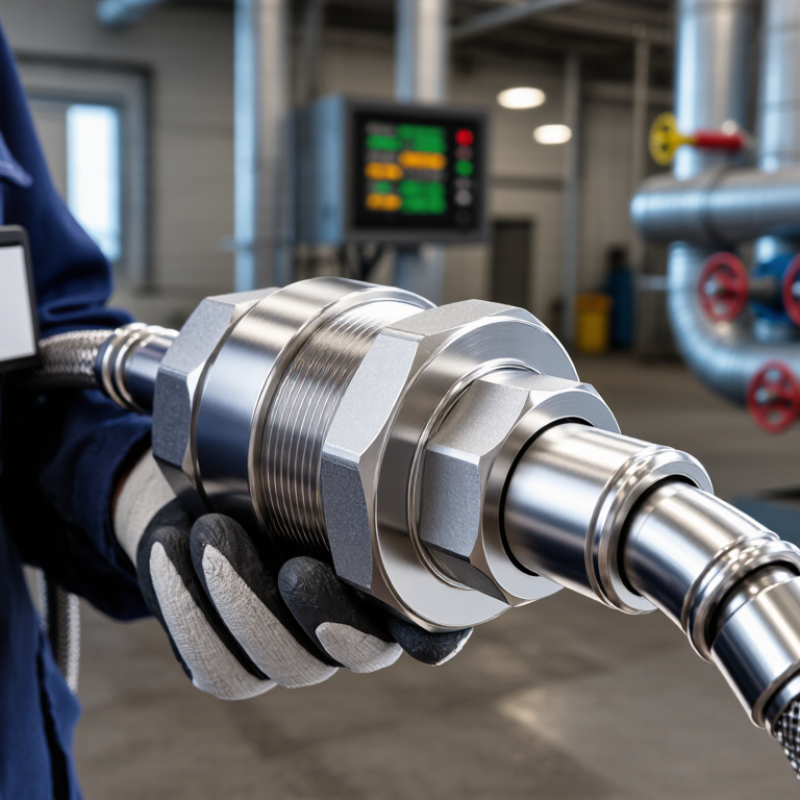
Quick-connect fittings join hoses, tubes, and equipment without threaded tools or lengthy assembly. A typical fitting has a body, gripping teeth, and an internal sealing ring. The tube slides through the opening until it reaches the correct insertion depth. The teeth hold it in place, while the seal prevents air or liquid from escaping. To disconnect it, press the release sleeve and pull the tube straight out.
In practical assembly work, this design saves time beside crowded machines and inside narrow service panels. It also helps global buyers simplify maintenance, especially when workers need frequent connection changes. However, speed should not replace verification. Tube material, outside diameter, pressure, temperature, and fluid compatibility must match the fitting specification. A fitting may feel secure yet still leak if the tube is cut unevenly or inserted too shallowly. Small details matter. Cutting the tube squarely, removing burrs, and checking for scratches on the seal improve reliability. Push it fully in.
Buyers should also review test methods, thread standards, replacement seals, and installation instructions before ordering across borders. Local conditions can expose weaknesses that laboratory demonstrations miss. I have found that hand-tight connections are not always consistent, particularly when vibration or heat changes the assembly. A simple leak test after installation is worthwhile. It is not glamorous, but it catches mistakes early. Even experienced technicians can overlook one damaged tube end during a busy repair.
| Fitting Type | How It Works | Typical Media | Common Materials | Typical Connection Size Range | Typical Pressure Capability | Key Advantages | Important Selection Considerations |
|---|---|---|---|---|---|---|---|
| Ball-Lock Quick Coupler | A sleeve-operated coupler uses locking balls to secure a plug. Internal valves normally close when the coupling is disconnected. | Compressed air, water, hydraulic fluid, and some process fluids | Brass, stainless steel, carbon steel, engineering polymers | Approximately 1/8 to 1 inch nominal connection sizes | Commonly from low pneumatic pressures to several hundred bar in hydraulic designs; rating depends on the series and size | Fast manual connection, broad availability, and simple operation | Confirm plug profile, valve configuration, flow direction, seal material, and pressure rating before interchangeability is assumed |
| Push-to-Connect Tube Fitting | Tubing is pushed through a collet and retained by gripping teeth. A seal is released by pressing the release ring. | Compressed air, inert gases, water, and low-pressure instrumentation service | Polymer body, nickel-plated brass, stainless steel, elastomer seals | Commonly 4 to 16 mm tubing or approximately 1/8 to 1/2 inch tubing | Often suitable for pneumatic systems up to approximately 10 bar, subject to temperature and tubing specifications | Tool-free assembly, compact design, and quick maintenance | Cut tubing squarely, insert it fully, and verify compatibility between tubing material, outside diameter, and seal compound |
| Flat-Face Hydraulic Coupler | Matched male and female halves connect with a sleeve or threaded locking mechanism. Flat valves minimize fluid loss and air inclusion during connection. | Hydraulic oil and other compatible hydraulic fluids | Hardened carbon steel, stainless steel, zinc or corrosion-resistant plating | Commonly 1/4 to 2 inches nominal connection sizes | Many designs are rated from approximately 200 to 450 bar; exact limits depend on size, series, and application | Low spillage, reduced contamination, and good suitability for mobile hydraulic equipment | Coupling must be fully locked; pressure should generally be removed before connection unless the design is specifically rated for connection under pressure |
| Threaded Hydraulic Coupler | Male and female halves are joined by manual threads, creating a mechanically secure connection for demanding hydraulic circuits. | Hydraulic oil, lubricants, and compatible industrial fluids | Carbon steel and stainless steel with elastomeric sealing elements | Commonly 1/4 to 1 inch nominal connection sizes | Frequently used in medium- to high-pressure systems, with ratings commonly reaching several hundred bar | High resistance to vibration and accidental uncoupling | Connection takes longer than sleeve-operated types; threads, torque, cleanliness, and seal condition require careful inspection |
| Dry-Break Coupler | Specially shaped valves close before the coupling separates, limiting liquid release and reducing vapor or air entry. | Chemicals, fuels, solvents, water, and other process liquids compatible with the selected materials | Stainless steel, aluminum, brass, fluoropolymers, and application-specific elastomers | Commonly 1/2 to 4 inches nominal connection sizes | Varies widely by design; many industrial models operate from low pressure to several tens of bar | Very low leakage, improved operator safety, and reduced environmental exposure | Check chemical compatibility, vapor pressure, allowable pressure drop, grounding requirements, and cleaning procedures |
| Cam-and-Groove Coupling | Two cam arms clamp over the adapter groove. No wrench is normally required for connection or disconnection. | Water, agricultural liquids, powders with suitable hose systems, and selected chemicals | Polypropylene, stainless steel, aluminum, brass, and ductile materials | Commonly 1/2 to 6 inches nominal connection sizes | Often used in low- to medium-pressure transfer service; ratings may range from approximately 5 to 20 bar depending on size and material | Very fast hose connection and convenient frequent transfer operations | Not normally recommended for compressed gas; secure the cam arms and verify that the gasket and adapter profile match |
| Bayonet Coupling | Male and female parts engage with a push-and-twist movement and lock through slots, pins, or lugs. | Air, water, fuel, electrical-fluid interfaces, and specialized industrial media | Aluminum, brass, stainless steel, engineering polymers | Commonly below 1 inch, with larger sizes available for specialized applications | Application-dependent; many designs are intended for low- to medium-pressure service | Quick alignment, compact installation, and positive mechanical locking | Inspect locking lugs and alignment marks; do not force the connection if the coupling is contaminated or misaligned |
| Multi-Line Quick Connector | Several fluid, pneumatic, hydraulic, or electrical circuits are connected simultaneously through one keyed interface. | Hydraulic oil, compressed air, coolant, electrical signals, and mixed utility systems | Aluminum, steel, stainless steel, thermoplastics, and plated components | Usually designed around application-specific ports rather than one universal size range | Each circuit has its own pressure and flow rating; the lowest-rated circuit limits the assembly | Reduces connection time, prevents cross-connection through keying, and simplifies equipment changeover | Evaluate alignment tolerance, circuit identification, residual pressure, service access, and the effect of connecting one circuit before another |
| Operating Principle | A quick-connect fitting consists of a plug and a coupler. The coupler normally includes a locking mechanism and may include one or two internal shut-off valves. When the two halves are connected, the valves open and allow fluid or gas to pass. When they are separated, the valves close in self-sealing designs to help limit leakage and contamination. | ||||||
| Global Buyer Checklist | Confirm the connection profile, nominal size, thread standard, pressure and temperature ratings, flow capacity, seal material, body material, media compatibility, applicable documentation, packaging requirements, and regional conformity requirements. A fitting with the same nominal size may not be interchangeable if its profile, thread form, valve arrangement, or locking system differs. | ||||||
| Data Qualification | The pressure, temperature, size, and media ranges shown are typical industry-use ranges rather than universal limits. Always use the manufacturer's technical documentation and system safety calculations for final selection. | ||||||
Note: Actual performance depends on design, material, seal compound, fluid properties, temperature, installation quality, and applicable safety factors.