A Mobile Excavator can bring useful flexibility to projects where access, travel time, and changing work locations matter. On a narrow roadside job, it may move between work areas without waiting for a low-bed trailer. On a larger site, its tires can help it travel across firm, prepared ground. Those advantages depend on the machine, the ground, and the task.
Equipment specialist Alex Morgan offers this illustrative perspective, not a verified quotation: “Choose mobility when moving between work zones is part of the job, not just a convenience.” That distinction matters. A wheeled excavator may suit urban utility work, road maintenance, and scattered service calls. Its cab can reach the next location quickly. Its boom can then dig beside a curb or trench, while stabilizers help steady the machine during work.
Still, wheels are not a universal answer. Soft soil, steep slopes, or heavy digging can favor a crawler excavator. Tire condition, ground pressure, transport rules, attachment compatibility, and operator visibility deserve close checks. A machine that travels quickly but struggles to dig efficiently can cost time in another way.
The right comparison starts with the actual route and work surface. Measure turning space. Check how often the machine must relocate. Ask operators what slows them down on comparable jobs. Their experience may reveal a detail missing from the equipment sheet. There is no perfect choice. The useful choice is the one that fits the site’s daily demands, including its awkward corners and muddy mornings.
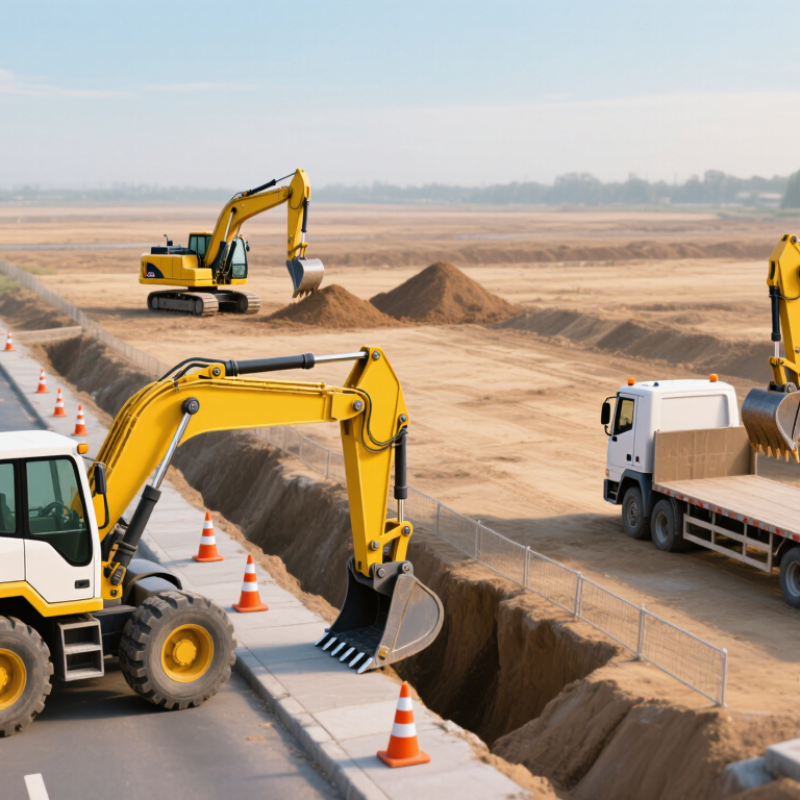
A mobile excavator is a hydraulic digging machine built on a wheeled undercarriage rather than tracks. Its upper body rotates, while a boom, arm, and bucket handle digging, lifting, and loading. Many models also use a front blade or stabilizers to steady the machine during work. The wheels allow it to move between nearby work areas without a separate carrier. That can save time on projects spread across streets, lots, or utility corridors.
Mobility is useful, but it is not a promise of better performance everywhere. On firm, level surfaces, a wheeled excavator can reposition quickly and leave less disturbance than tracked equipment. On muddy or uneven ground, it may struggle for traction. Tire condition, load, and operator judgment matter. Even familiar sites can surprise you. A careful site assessment helps determine whether a mobile excavator fits the work, attachments, and travel distances involved.
A mobile excavator can move between nearby work areas without waiting for a low-loader, provided the route and site rules allow it. That can help when a crew is repairing drainage along several streets or clearing utility trenches across a large property. On firm, level ground, its wheels make repositioning quick. Soft shoulders and deep mud are another matter.
At the jobsite, the machine’s equipment helps it adapt to changing tasks. A digging bucket can open a trench, while a narrower bucket may suit confined utility work. A hydraulic attachment can handle different materials, but changing tools takes time and requires a compatible setup. Stabilizers or a front blade can steady the machine during digging. Small details matter.
Before work starts, an operator should check ground conditions, overhead clearance, and the space needed to turn. A machine that moves easily on pavement may still struggle beside a wet trench. I would not treat mobility as a substitute for planning; even a short relocation can expose uneven ground or hidden obstructions. When access is tight, positioning the excavator carefully can save more time than moving it repeatedly.
Why Choose a Mobile Excavator for Your Project?
Key Benefits for Project Efficiency and Flexibility
A mobile excavator can move between nearby work areas without repeated trailer loading. That matters on road repairs, utility jobs, and sites where access changes by the hour. Rubber tires help it travel across paved surfaces, while an adjustable blade and outriggers provide stability during digging. On a tight street, the operator can reposition beside a trench instead of waiting for another machine. Small turns matter.
McKinsey’s 2017 Reinventing Construction report found that global construction labor productivity grew about 1% annually over two decades, compared with 2.8% for the wider economy. A mobile machine cannot fix that gap alone, but fewer equipment transfers can protect useful work time. The American Rental Association’s 2024 forecast estimated U.S. equipment and event rental revenue at $78.7 billion. That broad figure is not excavator-specific, but it reflects substantial demand for flexible equipment access. Still, mobility is not magic. Soft ground, steep slopes, and frequent long-distance travel may call for another machine or transport plan.
Tips: Walk the route before mobilizing. Check turning space, ground firmness, and where the machine can safely park. Match tire setup and attachments to the surface and task. A rushed route check can erase the time saved.
| Project factor | Mobile excavator benefit | Potential project impact | Best suited to |
|---|---|---|---|
| Travel between nearby work areas | Wheeled models can travel under their own power between suitable nearby sites, subject to road rules and machine specifications. | May reduce the need to load and unload the machine on a transport trailer for every short move. | Urban works, road maintenance, and projects with multiple nearby work zones. |
| Paved and finished surfaces | Rubber tires can be more appropriate than steel tracks on many paved surfaces when the machine is operated correctly. | Can help limit surface marking associated with steel tracks; use suitable tires, pads, and operating practices for the site. | Street works, utility repairs, and sites where surface protection matters. |
| Frequent repositioning | Road wheels allow the machine to move between work positions without relying solely on a separate transport vehicle. | Can make short relocations during a shift more straightforward, depending on site layout and local travel requirements. | Linear projects such as drainage, trenching, and roadside maintenance. |
| Working stability | Many mobile excavators use stabilizers, a dozer blade, or both to support the machine while digging. | Proper setup helps provide a stable working position; ground conditions, slope, and load limits must be assessed. | Work on firm, prepared ground with enough space to deploy the stabilizers or blade. |
| Urban site access | A wheeled configuration can be convenient where the route between work areas includes roads and hard surfaces. | Can support a flexible work sequence while reducing dependence on dedicated machine transport for short moves. | Built-up areas with accessible, load-rated routes and limited off-road travel. |
| Soft or uneven ground | Wheeled machines offer mobility on suitable firm ground, but tires may provide less traction and flotation than tracks in soft or muddy conditions. | A tracked excavator may be a better choice where ground bearing, traction, or rough-terrain access is the priority. | Choose according to soil conditions, access routes, machine specification, and the work required. |
| Road travel planning | Some mobile excavators are configured for road travel, but permitted routes, speed, dimensions, weight, and operator requirements vary by jurisdiction and machine. | Checking regulations and route constraints in advance helps avoid delays and supports safe, compliant movement. | Projects involving public-road travel between work locations. |
Mobile excavators suit projects that move between work zones, especially where public roads or paved access routes connect them. A road crew repairing drainage may need to dig several short trenches along one street. A wheeled machine can travel between nearby sections without requiring a transport vehicle each time. That saves setup time, though local travel rules and site conditions still need checking.
They also work well in urban utilities, roadside maintenance, landscaping, and small construction sites with firm, level ground. Picture a crew lifting a pavement panel, digging beside a curb, then placing spoil into a waiting truck. The machine’s mobility can reduce congestion when space is tight. On compact sites, though, turning room and safe separation from pedestrians matter more than travel speed. Plan the work area carefully.
Ground conditions are a key limit. Firm gravel, asphalt, and compacted soil generally provide better support than wet clay or loose fill. Soft ground can reduce traction and stability. Not ideal. Slopes, deep mud, and rough tracks may favor a tracked excavator instead. Even on suitable ground, operators should check the machine’s setup, attachment reach, and load limits before lifting. A mobile excavator is most useful when the job involves frequent repositioning, not when every task happens in one fixed spot.
Wheeled excavators can travel faster between nearby work areas on suitable roads, making them a practical choice for urban maintenance and projects spread across multiple sites. Representative maximum speeds vary by machine and conditions; off-road terrain may require a tracked excavator.
A mobile excavator can move between nearby work zones without a separate low-bed haul each time. That can save time on roadworks, utility repairs, and sites with several small digs. But mobility is not a substitute for traction. Wet clay, loose gravel, and steep shoulders can limit wheeled machines. Ground conditions matter. Check the route, turning space, and ground pressure before comparing engine power.
Match operating weight, reach, and lifting capacity to the actual tasks. A machine that reaches across a trench may still lack safe lifting capacity at that distance. Check attachment compatibility, stabilizer setup, and transport dimensions, too. The U.S. Bureau of Labor Statistics recorded 1,075 fatal work injuries in the construction industry in 2023. That broad figure is not specific to excavators, but it underlines the value of visibility, stable setup, and clear separation from workers. A rushed selection can miss these details.