Choosing a PCB supplier is rarely just a price comparison. A board may look simple in a drawing, yet depend on exact components, controlled processes, and dependable delivery. For global buyers, a missed lead time can disrupt an entire production schedule. Small details matter.
This guide introduces ten suppliers relevant to buyers sourcing Pcb Board Components and related PCB services. It considers practical factors such as product range, manufacturing capabilities, quality documentation, communication, and support for international orders. These are useful starting points, not guarantees of performance. Capabilities can change, and published claims should be checked directly.
A careful buyer can request current certifications, sample inspection reports, component traceability records, and a clear quotation based on the same bill of materials. Ask how suppliers handle substitutions, minimum order quantities, and delivery changes. Get specifics.
No single supplier fits every project. A prototype order may need quick engineering feedback, while ongoing production may depend more on stable sourcing and repeatable quality. That distinction is easy to overlook. Supplier rankings also have limits: public information may be incomplete, and an attractive website cannot replace technical review. The comparisons ahead are intended to help readers ask better questions, verify evidence, and shortlist partners with realistic expectations.
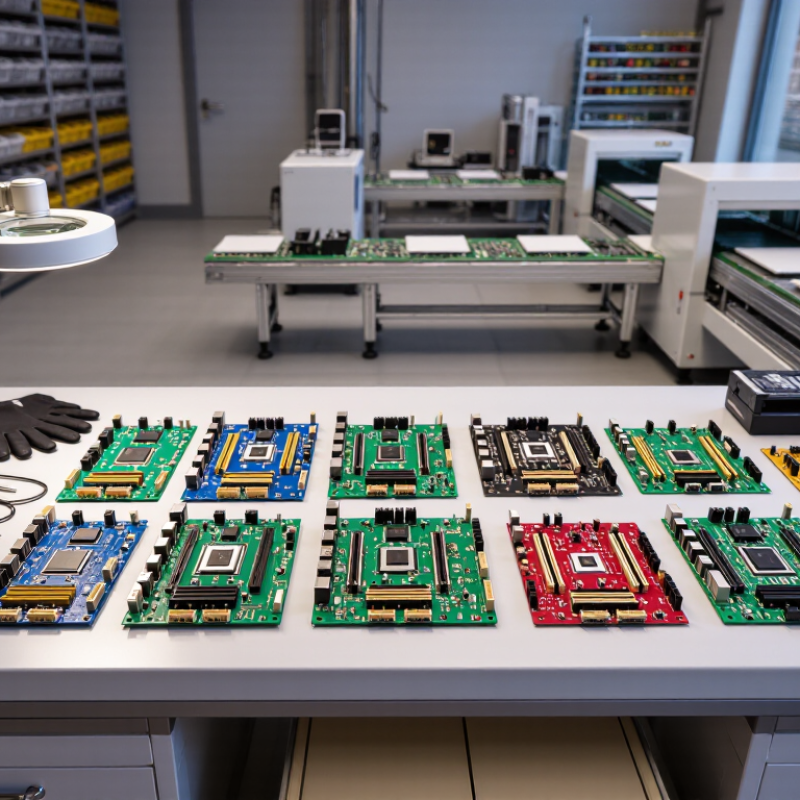
A PCB bill of materials should distinguish components mounted on the board from the bare board itself. Active parts include processors, memory devices, and power-management circuits. They need defined electrical ratings, package details, and programming requirements. Passive parts include resistors, capacitors, inductors, and filters. Small details matter. A capacitor’s voltage rating or tolerance can affect performance, even when its footprint matches.
Electromechanical items cover connectors, switches, relays, and sockets. Check pin layout, current rating, mating direction, and mechanical clearance. A connector may fit the drawing yet clash with an enclosure. The bare board is a separate procurement item, not just another component. Its layer count, thickness, copper weight, finish, and controlled-impedance requirements should appear in the fabrication data. Suppliers may quote the assembled board and bare board through different workflows.
For global sourcing, keep assembly and fabrication files aligned with the BOM revision. Include manufacturer-independent descriptions, approved alternatives where appropriate, and lifecycle status for critical parts. Then compare quotations against the same scope. A missing connector or unspecified board finish can distort cost and lead time. Not always. Even a carefully prepared BOM can leave room for interpretation, especially when notes conflict with drawings. Review those gaps with the engineering and purchasing teams before placing an order.
A practical 10-category reference for defining PCB assembly and bare-board sourcing scope. The entries describe component types and typical purchasing data—not named suppliers, brands, or a supplier ranking.
| No. | BOM Category | Example Line Items | Typical BOM Data | Common Package or Form | Purchasing and Engineering Checks |
|---|---|---|---|---|---|
| 1 | Bare board | Unpopulated printed circuit board (PCB) | Layer count, finished dimensions, thickness, copper weight, material, surface finish, solder-mask color, and controlled-impedance requirements | Rigid, flex, or rigid-flex board; panelized or individual units | Confirm the fabrication drawing, stack-up, drill data, impedance notes, acceptance criteria, and whether the board is quoted separately from assembly. |
| 2 | Active | Microcontroller or processor | Exact part number, operating voltage, memory, clock requirements, temperature range, and programming requirements | QFN, QFP, BGA, or through-hole package | Check package footprint, pinout, lifecycle status, firmware/programming needs, and traceability requirements. |
| 3 | Active | Power-management IC, voltage regulator, or driver IC | Input/output voltage range, output current, efficiency or thermal limits, control method, and protection features | SOIC, DFN, QFN, SOT, or other specified package | Verify the electrical operating conditions, thermal design, exposed-pad requirements, and recommended external components. |
| 4 | Active | Diode, transistor, or MOSFET | Device type, maximum ratings, voltage/current ratings, polarity, and switching or recovery characteristics where applicable | SOD, SOT, TO-style, or other surface-mount/through-hole package | Match the specified package and pin configuration; check voltage margin, current capability, dissipation, and thermal layout. |
| 5 | Passive | Fixed resistor | Resistance, tolerance, power rating, temperature coefficient, and any voltage or pulse requirement | Common chip sizes include 0402, 0603, and 0805 (imperial codes) | Confirm the footprint convention, power derating, tolerance, and whether a precision or current-sense part is required. |
| 6 | Passive | Ceramic or aluminum capacitor | Capacitance, rated voltage, tolerance, dielectric or construction, polarity where applicable, and temperature range | Chip, radial-leaded, or snap-in form | For ceramic capacitors, consider capacitance variation with DC bias and temperature; observe polarity for polarized types. |
| 7 | Passive | Inductor, ferrite bead, or transformer | Inductance or impedance, current rating, DCR, tolerance, frequency range, and magnetic construction | Chip, molded, shielded, or wound component | Check saturation current, thermal limits, footprint, and suitability for the circuit frequency and application. |
| 8 | Electromechanical | Board-to-board, wire-to-board, or I/O connector | Contact count, pitch, orientation, current/voltage rating, mounting style, and mating requirements | Through-hole, surface-mount, or cable-mounted | Verify the mating part, pin numbering, keying, retention, plating requirements, and mechanical clearance. |
| 9 | Electromechanical | Switch, relay, buzzer, or fan | Actuation or coil voltage, contact rating, operating life, sound/output rating, dimensions, and control requirements | Board-mounted or panel-mounted; through-hole or surface-mount | Check mechanical fit, load type, electrical ratings, polarity, acoustic or airflow requirements, and any assembly constraints. |
| 10 | Mechanical / assembly | Fastener, spacer, heatsink, shield, or other PCB-mounted hardware | Material, dimensions, thread, finish, thermal requirements, and installation method | Loose hardware, formed metal, or board-mounted part | Include items needed for the finished assembly even when they are not standard electronic components; confirm drawing and fit requirements. |
BOM scope note: An assembly BOM normally lists the components fitted to the PCB. The bare PCB may be managed as a separate fabrication item or included as a top-level assembly line, depending on the purchasing and manufacturing workflow. Always use the released BOM, approved drawings, and applicable specifications as the controlling documents.