Why Are Motors Essential for Industrial Applications?
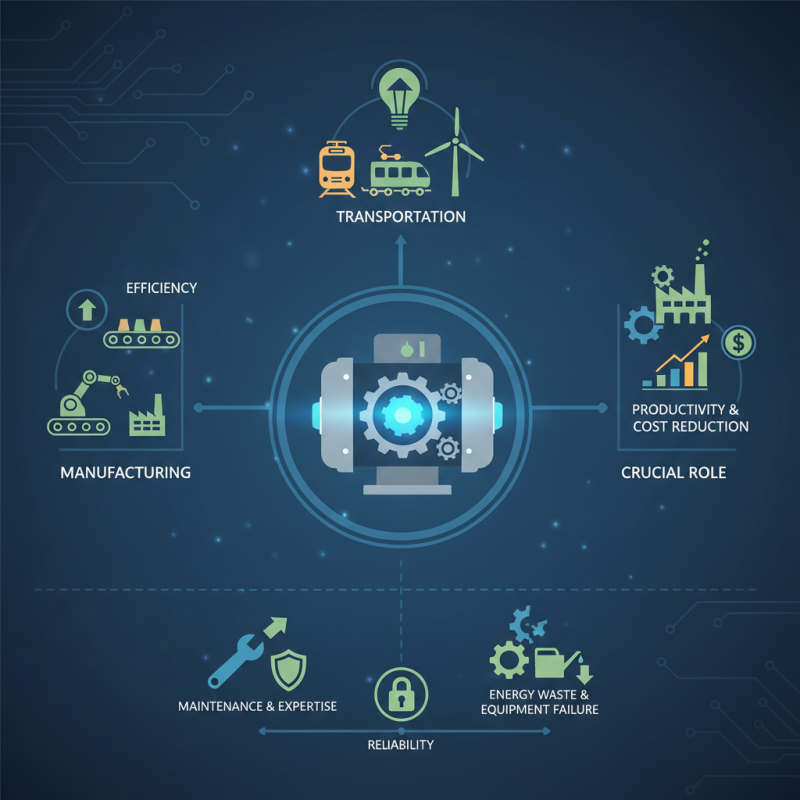
Motors play a vital role in modern industrial applications. Their significance can be seen across various sectors, from manufacturing to transportation. According to Dr. Emily Hart, an expert in motor technology, “The application of motors drives efficiency and innovation in every industry.” This highlights their crucial position in operational excellence.
In the industrial world, motors power machinery, automation systems, and essential equipment. They convert electrical energy into mechanical motion, which is fundamental for productivity. Every factory relies on efficient motors to enhance output and reduce costs. However, reliance on motors can lead to challenges, such as energy waste or equipment failure.
As industries evolve, the emphasis on the application of motors becomes even more prominent. Understanding these machines is essential for improving performance and minimizing downtime. Some companies overlook motor maintenance, risking significant losses. Finding the right balance between technology and management is necessary. Investing in skilled expertise can mitigate potential issues and harness the full potential of motors.
Importance of Motors in Industrial Processes
Motors are key players in various industrial processes. They drive machinery that helps in manufacturing, automation, and transportation. According to the International Electrotechnical Commission, around 70% of the electrical energy consumed in industries is used by motors. This highlights their significant role in efficiency and energy costs.
The functionality of motors impacts productivity. For example, they power conveyor belts, pumps, and compressors. The performance of these systems directly influences output and operational costs. Poorly functioning motors can lead to unplanned downtime, affecting overall productivity. A report from the U.S. Department of Energy indicates that improving motor systems can reduce energy consumption by up to 50%, showcasing the necessity of timely maintenance and upgrades.
Tip: Regularly monitor motor performance. Early detection of issues can save costs. Consider predictive maintenance technologies. They can prevent failures before they occur. Investing in highly efficient motors may also yield significant long-term savings.
Why Are Motors Essential for Industrial Applications? - Importance of Motors in Industrial Processes
| Application | Type of Motor | Power Rating (kW) | Efficiency (%) | Common Uses |
| Conveyor Systems | AC Motor | 5 - 10 | 85 - 95 | Material Handling |
| Pumps | DC Motor | 1 - 50 | 80 - 90 | Fluid Transport |
| Robotics | Step Motor | 0.5 - 5 | 75 - 85 | Precision Movement |
| HVAC Systems | Hermetic Motor | 0.5 - 15 | 90 - 95 | Heating and Cooling |
| Textile Machines | Induction Motor | 2 - 20 | 80 - 92 | Fabric Production |
Types of Motors Commonly Used in Industrial Applications
Motors play a critical role in industrial applications, powering various equipment and machinery. There are several types of motors commonly utilized in these settings. AC motors are among the most popular. They are reliable and efficient, often used in conveyor belts and pumps. DC motors, on the other hand, allow for precise speed control, making them ideal for applications requiring accuracy.
Stepper motors are widely used in automation. They divide a full rotation into equal steps, offering high precision. These motors suit programmable logic controllers (PLCs) well. For industries that need variable speed and torque, servo motors are the go-to choice. They deliver excellent performance and quick response, crucial for robotics and material handling.
When selecting a motor, consider its application environment. Ensure it matches the load requirements and operating conditions. Think about efficiency ratings too. Higher efficiency can lead to cost savings over time. Always plan for potential maintenance needs. Regular checks can prevent unexpected downtime and extend motor life. Choosing the right motor can boost overall productivity, but it demands careful consideration.
How Motors Enhance Efficiency and Productivity
Motors play a vital role in enhancing efficiency and productivity across various industrial applications. They convert electrical energy into mechanical energy, powering equipment like conveyors, pumps, and fans. This process significantly reduces manual labor, allowing workers to focus on complex tasks. In factories, motors drive assembly lines, ensuring consistent output and reducing downtime. When operational, machines run at optimal speeds, providing uniform quality across products.
However, relying on motors also presents challenges. Maintenance is critical, as any malfunction can halt production. Workers must be trained to identify potential issues early. Investing in regular inspections can prevent costly breakdowns. Additionally, energy consumption is an ongoing concern. Efficient motor design can mitigate these costs, but it requires careful consideration. Embracing newer technologies may improve performance but can involve initial expenses and a learning curve for staff.
In the pursuit of productivity, companies must weigh these factors. The balance between efficiency and reliability is crucial for maximizing output. Understanding the strengths and limitations of motors allows industries to adapt and innovate continually. Embracing sustainable practices can further enhance productivity while contributing to overall operational integrity.
Applications of Motors in Various Industries
Electric motors play a vital role in various industries by providing reliable and efficient power for numerous applications. In manufacturing, motors drive conveyors, pumps, and machinery, ensuring smooth operations. The automotive sector relies on motors for assembly lines and robotics, enhancing productivity. In building services, these motors support HVAC systems, ensuring comfort in commercial spaces.
Tip: Regular maintenance of motors can extend their lifespan. Check for wear and tear often.
In agriculture, motors operate irrigation systems and equipment, improving efficiency. They also power tools in woodworking and metal fabrication. The food and beverage industry uses motors for mixing and packaging, streamlining processes.
Tip: Investing in energy-efficient motors can reduce operational costs. This choice contributes to sustainability.
Sometimes, even well-maintained motors encounter issues. It’s essential to monitor performance and address any anomalies. Unexpected downtime can disrupt production. Continuous training for operators can minimize these risks and improve safety.
Future Trends in Industrial Motor Technology
The industrial motor technology sector is poised for significant changes in the coming years. According to a recent report from the International Energy Agency (IEA), energy-efficient motors can save up to 40% of energy compared to standard models. As industries strive for sustainability, the demand for such innovations is skyrocketing. Companies are increasingly adopting variable frequency drives (VFDs) to enhance efficiency and reduce energy consumption.
New developments highlight the shift toward smart motors. These motors will integrate IoT capabilities, allowing real-time monitoring and diagnostics. According to a study by McKinsey, the adoption of smart motors could lead to a potential 30% reduction in operational costs for manufacturing plants. Still, many organizations face challenges in implementation. Power fluctuations and equipment compatibility often hinder progress.
Tip:
Investing in training for staff on new motor technologies ensures smooth transitions and maximizes potential benefits.
Emerging trends also emphasize the use of renewable energy sources. For instance, using electric motors powered by solar energy can cut greenhouse gas emissions significantly. However, research by the World Economic Forum indicates that only 20% of industries are currently utilizing this technology. Many organizations must adapt faster to harness these advantages.
Tip:
Regular maintenance checks on existing motors can prepare facilities for future upgrades and improve overall reliability.
