
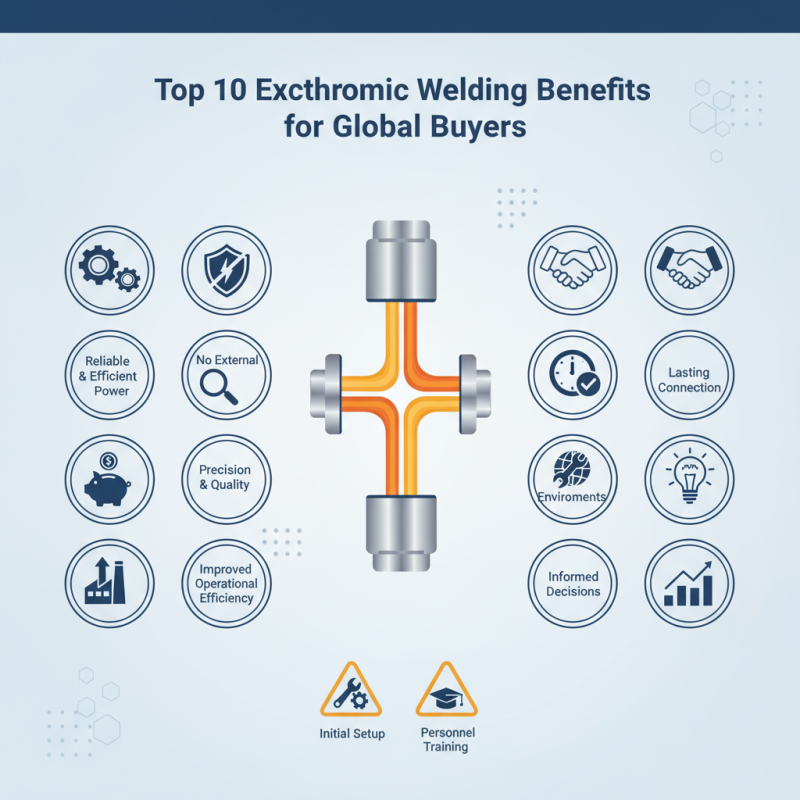
Exothermic Welding is a revolutionary process that offers numerous advantages for global buyers. As industries evolve, the need for reliable and efficient welding solutions grows. Exothermic Welding stands out due to its unique properties and benefits. It creates a robust bond through an intense chemical reaction, resulting in a lasting connection between metals.
Understanding the advantages of Exothermic Welding can empower buyers to make informed decisions. This welding method eliminates the need for external power sources, ensuring seamless operations in diverse environments. Moreover, the precision it delivers enhances the quality of the weld. Buyers should also consider potential challenges, such as the initial setup and required training for personnel.
By weighing these factors, organizations can truly appreciate the value of Exothermic Welding. Investing in this technology can lead to significant long-term savings and improved operational efficiency. The continued development of Exothermic Welding techniques reflects its growing importance in the welding industry.
Exothermic welding has gained popularity in various industries for its unique advantages. This process utilizes a chemical reaction to create heat and bond metals, ensuring a durable and robust connection. According to industry reports, the global demand for exothermic welding systems has increased by 15% in the last five years, reflecting its growing acceptance.
One notable benefit of exothermic welding is its simplicity and effectiveness. Operators can quickly learn the technique, cutting down on training times. The process requires minimal equipment, which can lower initial costs. However, it’s essential to recognize potential safety concerns. Ensuring proper ventilation and protective gear is crucial.
Tip: Always conduct a thorough risk assessment before starting a project. You should prioritize safety training alongside traditional welding practices.
Additionally, exothermic welding creates strong, corrosion-resistant joints. This feature is particularly beneficial in harsh environments. Studies show that these welds can enhance the longevity of electrical connections by up to 30%. Still, careful monitoring is necessary. Each project may present unique challenges that demand specific strategies.
Tip: Regular maintenance and monitoring of welded connections can help prevent future failures.
Exothermic welding is a crucial process for many industries. It offers significant benefits that attract global buyers, especially in construction and electrical sectors. According to a recent report, exothermic welding can reduce electrical resistance by up to 80%. This reduction is vital for enhancing the efficiency of electrical connections.
One of the key advantages of exothermic welding is its strong, permanent bonds. These connections can withstand harsh environmental conditions. A study shows that these welds have a tensile strength greater than 100 MPa, making them highly reliable. Additionally, this method minimizes the risk of corrosion, a common issue in traditional welding methods.
Cost-effectiveness is another notable benefit. Exothermic welding requires less maintenance and fewer materials. This means lower long-term costs for buyers. However, it's important for buyers to recognize that, while the upfront costs may be competitive, training and safety measures must be prioritized. The process demands proper handling to achieve the best results. Understanding the balance between costs and quality is crucial for making informed decisions.
Exothermic welding is gaining traction as an efficient alternative to traditional welding methods. A comparative analysis reveals notable differences in performance and benefits. According to industry reports, exothermic welding offers enhanced bond strength due to the chemical reaction that occurs during the process. This results in connections that are often stronger than the materials being joined, with tensile strengths exceeding 10,000 psi in some applications.
Traditional welding methods, like arc or MIG welding, may require more extensive preparation and finishing. The heat from these processes can distort materials and may compromise structural integrity. In contrast, exothermic welding requires minimal surface preparation. This results in faster application times and reduced labor costs. Research suggests that exothermic welding can reduce project timelines by up to 30%, which translates into significant savings for global buyers.
Tips: When considering between these methods, evaluate the specific project needs. Always keep material compatibility in mind. It’s essential to focus on the long-term performance of the weld, rather than just the immediate costs. Regularly review your welding techniques and stay informed about advancements in the field to ensure your methods remain effective and reliable.
Exothermic welding offers significant cost-effectiveness in industrial applications. This method requires minimal equipment and supplies, reducing initial investment costs. The process is simple, which leads to quicker training times for new workers. Fewer complications mean lower labor costs and less time wasted.
Moreover, the durability of exothermic welds contributes to long-term savings. Since these welds are designed to withstand harsh environments, they often require less maintenance. In industries where equipment failure leads to costly downtime, this durability proves invaluable. However, not all projects will benefit equally. Some operations might find limitations in scalability or require adjustments for specific conditions.
Additionally, the process generates heat with minimal energy consumption. This can lower operational costs over time. Yet, companies need to evaluate their unique needs before committing to this approach. Regulatory considerations and safety protocols should never be overlooked, as they are essential for an efficient implementation. Balancing these factors can lead to optimal outcomes while fostering economic efficiencies in the long run.
| Benefit | Description | Cost-Effectiveness | Speed of Implementation | Durability |
|---|---|---|---|---|
| High Strength Joints | Creates strong, long-lasting connections without the need for additional materials. | Reduces replacement costs due to joint failure. | Quick setup and curing time allows for immediate load-bearing. | Excellent resistance to mechanical and thermal stress. |
| Versatility | Applicable to various material types including steel, copper, and aluminum. | Flexibility in applications minimizes need for multiple welding processes. | Allows quick adjustments in diverse settings. | Durable bonds for a wide range of industrial uses. |
| Environmentally Friendly | Uses minimal resources and produces less waste compared to traditional welding. | Lower waste results in reduced disposal costs. | Fast application limits environmental impact. | Environmentally safer options available. |
| Reduced Labor Costs | Requires less skilled labor than traditional methods. | Decreased need for specialized training reduces overall workforce costs. | Fast learning curve facilitates quicker onboarding. | Reliable performance with lower maintenance labor. |
| Safety Improvements | Lower risk of fire hazards as it does not involve open flames. | Fewer safety incidents lead to reduced insurance costs. | Quick and safe application minimizes on-site risks. | Resilient connections that endure harsh conditions. |
| Lower Equipment Costs | Requires simpler and less expensive equipment. | Lower upfront investment for welding equipment reduces overall project costs. | Operational efficiency can be achieved quickly using basic tools. | Durable equipment can operate effectively over time. |
| Minimal Post-Processing | Reduces the need for extra finishing processes. | Time and cost savings result from fewer steps. | Prompt disposal or use can be achieved without waiting for additional work. | Stable welds that often require no further treatment. |
| Consistency in Quality | Offers consistent weld quality across multiple applications. | Reliable quality reduces the need for rework. | Fast turnaround maintains project timelines. | Consistent outcomes enhance the lifespan of products. |
| No Need for External Power | Relies on chemical reactions for heat generation. | Saves on electricity costs by eliminating the need for power sources. | Can be performed virtually anywhere without the dependency on power. | Effective in remote areas where power supply is limited. |
Exothermic welding is not just an efficient joining process; it also has significant environmental benefits. This method uses a chemical reaction to generate heat, allowing for the bonding of metals without external energy sources. By eliminating the need for electricity or gas, exothermic welding reduces carbon emissions associated with energy use. It’s a greener alternative, especially in remote areas where energy access is limited.
Sustainability in exothermic welding practices hinges on the materials used. The process relies on minimal waste, as it uses recyclable metals. This not only conserves resources but also minimizes environmental footprint. However, awareness is crucial. Some materials might still pose risks if not managed properly. It's essential for practitioners to consider sourcing from eco-friendly providers to enhance sustainability.
Despite its advantages, challenges persist in optimizing exothermic welding for broader use. Training is vital to ensure proper execution. Poor technique can lead to ineffective joins, impacting structural integrity. Furthermore, raising awareness about its benefits among decision-makers is essential. They must weigh the immediate costs against long-term sustainability gains. The journey toward a greener future involves constant learning and adaptation.