Why Convert Three Phase To Single Phase Inverter for Efficiency?
The transition from three-phase to single-phase inverters is gaining attention in the renewable energy sector. As businesses seek efficiency, the demand for effective power management is critical. Reports indicate that single-phase systems can reduce installation costs by up to 30%, making them appealing for small-scale applications. The shift to a Three Phase To Single Phase Inverter is not merely a technical adjustment; it's a strategic move to maximize performance.
Efficiency in energy conversion remains paramount. According to industry data, three-phase systems often experience up to 10% losses in energy transfer. In contrast, single-phase solutions can minimize these losses through optimized designs. However, users must consider load requirements carefully. A mismatch could lead to reduced performance, requiring reevaluation of initial assumptions about power needs.
The current renewable energy landscape necessitates caution. While the benefits of converting to single-phase inverters are clear, their application isn’t universally ideal. Certain conditions may still warrant traditional three-phase systems. Therefore, exploring the nuances in application determines the overall feasibility and performance in real-world settings.
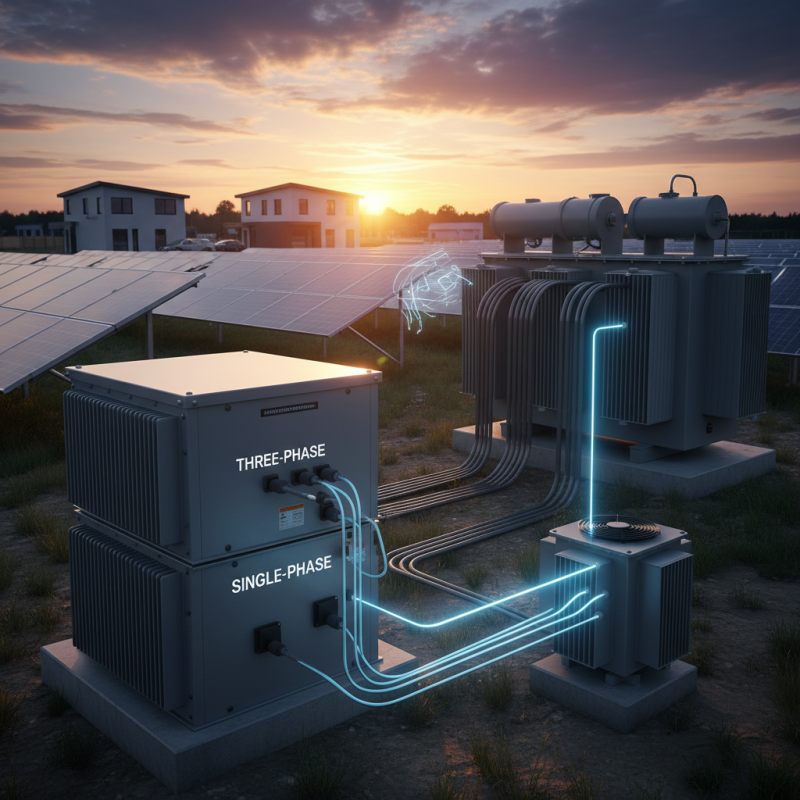
Understanding Three Phase and Single Phase Inverters
Inverter technology has evolved significantly, with three-phase and single-phase inverters being widely used across various applications. Three-phase inverters are often known for their efficiency. They typically provide smoother operation and reduced vibration, which is critical in industrial settings. However, single-phase inverters remain essential in residential applications, especially where power requirements are lower.
According to a report by the International Energy Agency, single-phase inverters can achieve up to 95% efficiency in certain applications. This is compelling when considering that 70% of residential buildings use single-phase power. By using single-phase inverters, homeowners can reduce energy losses during voltage conversion. Yet, there remains a trade-off; larger power systems may not fully utilize the potential of a single-phase setup. A comprehensive understanding of the needed load is vital.
Converting a three-phase system to a single-phase inverter can lead to increased efficiency in appropriate applications. Industry studies indicate that such conversions have shown energy savings of around 10-15% in specific scenarios. Nevertheless, miscalculating the load requirements can lead to overloading the inverter, which could decrease overall efficiency. Therefore, careful consideration is paramount. Understanding the nuances of both inverter types leads to better energy management.
Advantages of Using Single Phase Inverters Over Three Phase
Single-phase inverters are gaining popularity in various industries due to their efficiency and reliability. Many users report lower energy costs when utilizing these systems. Research from the Institute of Electrical and Electronics Engineers (IEEE) shows that single-phase systems can be up to 20% more efficient than their three-phase counterparts in specific applications.
One significant advantage of single-phase inverters is their simpler design. Their components are often lighter and easier to install. A study by the National Renewable Energy Laboratory (NREL) indicated that installation time can be reduced by 30% with single-phase systems. This is crucial for industries looking to minimize downtime and optimize workforce productivity. However, some applications may still require three-phase inverters due to higher power requirements.
The lower operational complexity of single-phase systems can result in less maintenance. According to a report by the Solar Energy Industries Association, maintenance costs for single-phase systems can be up to 25% lower than for three-phase systems. This can benefit users in sectors where budget constraints are a concern. Yet, it’s essential to acknowledge that not every scenario favors single-phase systems. Proper assessment of energy needs is critical to make the right choice.
Why Convert Three Phase To Single Phase Inverter for Efficiency? - Advantages of Using Single Phase Inverters Over Three Phase
| Aspect | Single Phase Inverter | Three Phase Inverter |
| Efficiency | High for residential applications | Very high for industrial applications |
| Cost | Generally lower | Higher due to complexity |
| Installation | Simpler and faster | More complex requiring skilled labor |
| Power Output | Sufficient for residential needs | Higher output capacity |
| Use Cases | Home appliances, small systems | Large industrial systems |
| Maintenance | Easier due to fewer components | Requires regular checks on multiple phases |
Efficiency Gains from Converting Three Phase to Single Phase
Converting a three-phase inverter to a single-phase system can lead to significant efficiency gains. Three-phase systems are often used in industrial settings due to their high power and stability. However, for residential use, single-phase systems often suffice and can be more efficient in specific situations.
Transitioning to a single-phase inverter can reduce energy losses during conversion and transmission. This can result in lower electricity bills over time. It's especially beneficial for small appliances and lighting. Additionally, the installation and maintenance costs are generally lower for single-phase systems.
Tips: When considering this conversion, evaluate your energy needs carefully. Ensure your current equipment can operate effectively on a single-phase device. It’s essential to consult with an electrical expert to understand potential drawbacks, such as lower power output. Sometimes, the change might not yield the expected results. Balancing efficiency with actual usage is key.
Applications in Residential and Commercial Energy Systems
Converting three-phase systems to single-phase systems has become a notable trend in residential and commercial energy applications. This conversion offers several benefits, particularly in efficiency and cost-effectiveness. In residential settings, many home appliances operate on single-phase power. By converting three-phase power systems, homeowners can simplify their electrical installations, reducing complexity and risk.
In commercial energy systems, the efficiency gains are even more pronounced. Many small businesses rely on single-phase power for lighting and heating. A conversion reduces energy losses, leading to lower utility bills. However, the transition can be challenging. It may require careful planning and professional installation to maintain reliability. Often, there are concerns about the optimal power distribution. This is where professional insight becomes crucial.
Additionally, there are limitations to consider with this approach. Some heavy machinery requires three-phase power for optimal performance. Using a single-phase inverter may lead to potential underperformance in these devices. Companies must weigh the costs and benefits based on their specific context. Despite the challenges, many find that the conversion aligns well with their energy needs and sustainability goals.
Efficiency Comparison of Three Phase and Single Phase Inverters
This chart illustrates the efficiency comparison between three phase and single phase inverters. As shown, three phase inverters offer a higher efficiency of 95% compared to 90% for single phase inverters, making them a more suitable option for various energy applications in both residential and commercial systems.
Challenges and Considerations in the Conversion Process
Converting a three-phase inverter to a single-phase inverter can enhance efficiency in various applications. However, this conversion presents unique challenges. One significant issue is the imbalance in power distribution. Industry reports indicate that around 20% of energy loss can occur due to uneven load distribution in single-phase systems. Engineers must address this to optimize performance.
Component compatibility is another critical consideration. Many devices are designed for three-phase operation. When converting, it's crucial to ensure that the new configuration supports intended loads without overheating or failing. According to a study by the Electric Power Research Institute (EPRI), improper conversion can lead to a 15% reduction in efficiency. This can diminish expected gains.
Additionally, the interaction between the inverter and loads needs proper examination. Capacitive and inductive loads behave differently in single-phase systems. Such behavior can affect overall efficiency. It is essential to assess how these loads react during operation. Understanding these nuances can prevent issues like voltage drops and harmonics. Thus, the conversion process requires careful planning and ongoing adjustment.
