
Choosing a China-based Automated Palletizing Robot manufacturer is not just a price comparison. The right system must handle the actual load, carton size, pallet pattern, and production rhythm. A robot rated for a high payload may still disappoint if its reach or gripper does not suit the line. Small details matter: dusty cartons, uneven stacks, and a conveyor that pauses unexpectedly.
Robotics expert Henrik Christensen’s work offers a useful principle, paraphrased here: judge automation by how well it improves the complete human-machine workflow, not by speed alone. That distinction matters. A fast robot can create a bottleneck when upstream packing changes or operators need frequent resets. A clean demo is not enough.
This article examines leading manufacturers in China through practical criteria: robot performance, palletizing software, integration experience, safety features, customization, and after-sales support. It also considers whether a supplier can provide credible application data, clear commissioning plans, and responsive technical help. Buyers should ask for cycle-time tests using their own products and pallet layouts. They should also check what happens when specifications change. No supplier is ideal for every factory, and published claims deserve careful verification. The comparisons that follow aim to make those trade-offs easier to assess before a purchase decision.
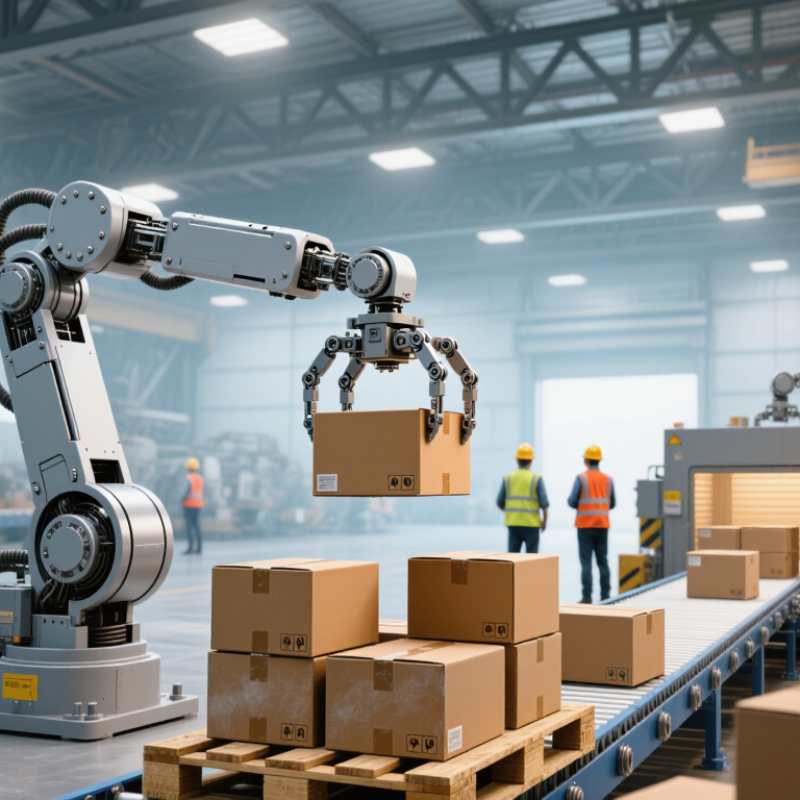
Automated palletizing robots move cartons, bags, or cases from a conveyor onto pallets in a planned pattern. A controller follows programmed positions and coordinates movement with the conveyor. At the robot’s end, a vacuum head or mechanical gripper holds each load. Sensors can check product position and confirm that a pallet is ready. The robot places each item, layer by layer. That is the basic cycle.
The pattern depends on package size, weight, and stacking stability. Operators typically enter these details into a control interface and select a pallet recipe. A poorly chosen pattern can leave gaps or create an unstable load, even when the robot repeats every movement correctly. Real packages may also vary slightly in shape. This is where setup and observation matter. Automation reduces repetitive lifting, but it still needs routine checks, trained operators, and suitable guarding.
Tips: Measure a few real packages, not just the ideal dimensions. Test a full pallet before regular production. Watch for slipping, crushed corners, and uneven layers. Small adjustments can help; still, no setup is perfect.
For buyers comparing automated palletizing systems in China, the key technologies matter more than a robot’s headline speed. A 3D vision camera can measure carton position and orientation before each pick. This helps when boxes arrive slightly skewed or vary in size. Small details matter. Dust, glossy wrapping, and soft packaging can still confuse sensors, so real production tests are essential.
Robot motion control coordinates the arm, conveyor, and pallet pattern. A well-tuned system places cases smoothly and reduces sudden stops. The end-of-arm tool matters too: vacuum cups suit many sealed cartons, while grippers may handle unstable loads better. Neither works for everything. A programmable controller manages recipes and communicates with upstream equipment, while safety scanners monitor access around the cell. Yet a clean simulation can hide awkward changeovers or poorly placed sensors. Buyers should check recovery procedures, tool changes, and performance with their own products, not just ideal sample boxes.
Evaluating palletizing robot manufacturers in China starts with the actual load, not a brochure. Share your carton dimensions, weight range, pallet pattern, and target cycle time. Ask whether the proposed system can handle mixed cartons without frequent manual resets. A video of a fast pick is useful, but a factory acceptance test with your own products is better. Ask for measured cycle times, including gripping, turning, and pallet changes.
Inspect the end-of-arm tool closely. Does it hold a dusty, slightly crushed carton securely? Can suction cups or grippers be replaced without special tools? Details matter. Request drawings showing the robot, conveyor, guarding, and operator access.
Confirm who handles installation, training, spare parts, and remote troubleshooting, and get realistic response times in writing. Check references for projects with similar loads and operating hours, not just similar industries. Ask how the supplier documents safety checks and acceptance criteria.
A low quoted price may exclude integration work. That is easy to miss. Compare itemized proposals and clarify what happens when the line’s actual cartons differ from the sample. Some assumptions will still prove wrong; leave room for a supervised trial and adjustments before full production.
Leading Automated Palletizing Robot Manufacturers in China
China’s automated palletizing robot manufacturers offer systems for different payloads, package sizes, and production speeds. Strong suppliers can explain how their robot, gripper, conveyor, and safety equipment work as one cell. Ask for a layout based on your actual carton dimensions, pallet pattern, and available floor space. A line handling 12-kilogram cartons needs different tooling from one handling soft bags. Details matter. Request a live test with your products, especially if cartons vary in shape or arrive slightly damaged. Published cycle times may not reflect real shifts, changeovers, or operator access.
Tips: Compare cycle time, payload, footprint, and service response together. Ask what routine maintenance involves and which parts need frequent replacement. Test the awkward case. A neat demo is useful, but it is not a full production trial.
When assessing manufacturers, look for clear technical drawings, documented acceptance criteria, and practical commissioning support. Confirm how the system handles pallet changes, faults, and recovery after an emergency stop. Ask for references from similar applications, while remembering that one installation cannot guarantee the same result at another factory. A supplier may be capable, yet its proposed solution can still need adjustment. That is worth discussing early. Good communication during design often prevents avoidable surprises on the plant floor.
Annual industrial robot installations in China, 2019–2023
China’s large and growing industrial robot base provides context for demand across applications such as automated palletizing. These figures cover all industrial robot applications, not palletizing robots alone. Source: International Federation of Robotics (IFR), World Robotics.
Automated palletizing robots serve food and beverage plants, consumer-goods lines, warehouses, and building-material producers. Each setting brings different demands. A beverage line may need steady handling of heavy cases, while a warehouse may switch between pallet sizes throughout the day. Dust, cold rooms, washdown routines, and limited floor space can also affect robot selection.
When comparing suppliers, ask for a trial using your actual cartons, pallet pattern, and target cycle time. Request clear figures for payload, reach, changeover time, and expected uptime, then check how those figures were measured. Inspect the proposed cell layout, including guarding, pallet access, and space for maintenance.
Practical details matter.
A robot that fits on a drawing may leave too little room for an operator to replace a roll of stretch film. Also ask who handles installation, staff training, spare parts, and fault response. Talk with customers running similar products, not only similar robots. No checklist removes every surprise.
I would leave some time for testing, because cartons can behave differently when their dimensions or surface grip vary slightly. A supplier should explain these limits plainly and help define acceptance tests before the system is installed.