
10 Best Lead Glasses for X Ray Protection in 2026

A scatter plume can rise from the patient table while a clinician leans toward the monitor. In that moment, Lead Glasses are one part of a broader eye-protection plan—not a substitute for distance, shielding, or sensible positioning. ICRP Publication 118 recommends an occupational lens-dose limit of 20 mSv per year, averaged over five years, with no single year exceeding 50 mSv. The report also identifies 0.5 Gy as the threshold for radiation-related lens tissue reactions. These figures describe protection guidance; they do not predict an individual worker’s exposure.

Medical physicist John W. Hendee’s work reflects the ALARA principle: “as low as reasonably achievable.” That principle makes fit and daily use matter. Frames that slip down the nose, leave wide side gaps, or feel heavy after a long procedure may not offer practical protection. A product’s lead-equivalent rating, lens coverage, weight, and compatibility with prescription lenses deserve close attention. So does workplace monitoring. One detail is easy to overlook: eyewear performance depends on how it is worn.

This 2026 guide compares ten lead glasses options through those practical checks, alongside manufacturer specifications and radiation-safety guidance. It does not treat a high lead-equivalence number as an automatic winner. Real-world fit can be messy, and product claims are not a substitute for professional assessment. Use the shortlist to ask better questions, then confirm suitability with your facility’s radiation-safety officer.
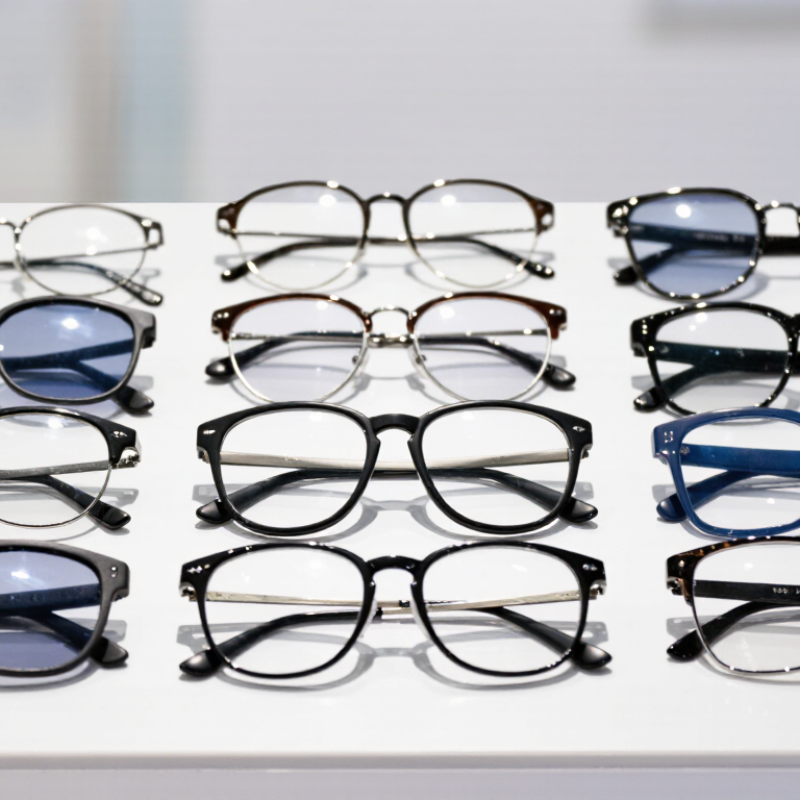
10 Best Lead Glasses for X Ray Protection in 2026

How Lead Glasses Help Reduce X-Ray Exposure

During fluoroscopy and other X-ray procedures, some radiation scatters from the patient toward nearby staff. Lead glasses are designed to reduce this exposure to the eyes. Their lenses contain radiation-attenuating material, while side shields can help limit scatter entering from the edges. They help, but they do not block every X-ray.

Protection depends on factors such as lens lead equivalence, fit, and the direction of scattered radiation. Glasses that sit close to the face, with broad coverage around the eyes, can reduce gaps at the temples. A loose frame may leave more of the eye area exposed. Staff should check the stated protection rating and follow their facility’s radiation-safety guidance rather than relying on appearance alone.

Small details matter. If glasses slide down while someone leans toward a monitor, coverage may change during the procedure. They should be kept clean and inspected for damage, since scratched lenses can make precise work harder. Even well-fitted lead glasses protect only the eyes; they are not a substitute for distance, shielding, protective clothing, or exposure-time controls. And no pair is perfect. That is worth remembering when a busy room makes protective equipment feel routine.

Essential Features of Protective Lead Glasses

Protective lead glasses are only useful when their shielding matches the work. Check the stated lead equivalence and confirm it suits your facility’s radiation-safety guidance. Numbers matter. So does coverage: wraparound frames or side shields can help reduce exposure from angles that standard lenses leave open.

Lens clarity affects comfort and careful work. Look for even, undistorted optics, especially if you read small markings or watch a monitor for long periods. A secure, comfortable fit matters too. Glasses that slide down invite frequent adjustment, while a poor bridge fit can create pressure during a long procedure. If you wear prescription lenses, check compatibility before choosing a frame.

Weight is easy to overlook until the end of a shift. Lighter glasses may feel better, but they still need durable frames and reliable hinges. Ask for current product documentation, including shielding specifications and care instructions. Clean lenses with a soft cloth and approved solution; scratches can make visual checks harder. No pair replaces appropriate room shielding or established safety practices. And honestly, choosing by appearance alone is tempting, but it tells you little about protection.

How to Choose Lead Glasses for Your Work

10 Best Lead Glasses for X Ray Protection in 2026

How to Choose Lead Glasses for Your Work

Choose glasses for the X-ray tasks you perform, not just their appearance. Interventional work may involve long periods near the patient, while dental or imaging tasks have different viewing angles. Check the stated lead equivalence and confirm it applies to the lenses, not only the side shields. Side protection matters when scattered radiation can reach you from an angle. Fit matters, too. Frames should sit securely without sliding when you look down, and should leave room for prescription lenses if needed. A fitting can still be imperfect; test comfort during realistic work movements.

Use dose data to guide the choice. ICRP’s 2011 Statement on Tissue Reactions recommends an occupational equivalent-dose limit for the eye lens of 20 mSv per year averaged over five years, with no year above 50 mSv. ICRP Publication 118 (2012) gives 0.5 Gy as the approximate threshold for radiation-induced lens tissue reactions. These are protection benchmarks, not a promise that any glasses alone will keep exposure below a limit. Follow workplace monitoring results and local radiation-safety guidance. Ask a qualified radiation protection professional to assess your task, fit, and shielding setup. Keep lenses clean, inspect frames for damage, and replace eyewear if its protective labeling or condition cannot be verified.

Ten Lead Glasses to Consider in 2026

Ten Lead Glasses to Consider in 2026

Choosing protective eyewear starts with the work, not the frame style. Check documented lead equivalence, lens coverage, and workplace requirements before comparing designs. These ten options describe useful features, not a universal ranking: lightweight wraparound frames, side-shielded frames, adjustable nose pads, wider bridges, prescription-ready lenses, over-prescription styles, compact frames, larger lenses, anti-fog coatings, and replaceable components.

A snug wraparound design can reduce gaps near the temples, while side shields add coverage at the edges. Adjustable nose pads may help keep lenses in place during long procedures. Larger lenses can suit people seeking more coverage, but they may feel heavier. Prescription-ready and over-prescription styles solve different vision needs; confirm that either option fits securely without blocking your view. Anti-fog coatings can help when rooms are warm, though no coating prevents fog in every condition. Small details matter.

Ask for current protection documentation and check that the glasses fit your face and workflow. They should not pinch, slide, or interfere with other protective equipment. Weight is easy to underestimate. Try them on before committing, if possible, and inspect lenses and frames regularly for damage. Glasses are one layer of protection, not a substitute for room shielding or approved work practices. Fit remains personal, and even well-documented eyewear may be uncomfortable after a full shift. That deserves honest consideration.

10 Best Lead Glasses for X-Ray Protection in 2026 — Ten Lead Glasses to Consider in 2026

Option Frame and Lens Design Coverage Profile Fit Considerations Suitable Use Protection Details to Verify
1. Wraparound Lead Glasses Curved lenses with a frame that follows the face Broad frontal coverage; side coverage depends on the frame design Check for comfortable temple contact and adequate clearance from the cheeks Staff who need a close-fitting, general-purpose style Confirm the lens and lateral protection ratings separately, along with the test conditions
2. Panoramic Lead Glasses Wide lenses designed to provide an expanded field of view Wide front coverage; peripheral protection varies by model Assess visibility, weight, and fit during the tasks for which the glasses will be used Work requiring a wider viewing area Check documented lead equivalence across the lens and any side panels
3. Side-Shield Lead Glasses Conventional lens shape with attached or integrated side shields Front and lateral coverage, subject to the size and rating of the shields Ensure the shields do not obstruct peripheral vision or interfere with other equipment Users seeking additional lateral coverage in a familiar frame style Verify that side shields have a stated protection rating rather than assuming they match the lenses
4. Fit-Over Lead Glasses Roomier frame designed to be worn over some prescription eyewear Coverage depends on both the fit-over frame and the eyewear beneath it Try them over the actual prescription glasses; check for gaps and pressure points Prescription-glasses users who prefer not to use prescription lead glasses Confirm that the frame sits correctly and that the stated protection applies to the complete eyewear
5. Prescription Lead Glasses Protective lenses made to an individual vision prescription Coverage depends on lens shape, frame geometry, and any side protection Requires an accurate prescription and a frame suitable for the wearer’s face Regular users who need vision correction while wearing protective eyewear Request documentation for the finished eyewear and check ratings for all protected areas
6. Adjustable-Nose-Bridge Lead Glasses Frame with a nose bridge or nose pads that can be adjusted Coverage varies; a stable position helps keep the lenses properly aligned Useful when a fixed bridge does not sit securely or comfortably Users who need a more adaptable fit across different facial shapes Check that adjustment does not create gaps or move the lenses away from their intended position
7. Lightweight-Frame Lead Glasses Frame designed to reduce overall eyewear weight Protection depends on lens and frame construction, not weight alone Compare comfort during the expected wearing period; balance and fit also matter Longer tasks where comfort is an important selection factor Do not infer protection from frame weight; review the eyewear’s documented ratings
8. Compact-Frame Lead Glasses Smaller frame profile with a more limited lens area Typically less facial area is covered than by wider or wraparound designs Check that the smaller frame fits securely without leaving unwanted gaps Users who prefer a less bulky frame and whose task allows its coverage profile Compare the protected area and side coverage with the needs of the specific work setting
9. High-Coverage Lead Glasses Design emphasizing larger lenses and extended coverage around the eyes Potentially broader coverage, subject to the actual frame and shield construction Check comfort, field of view, and compatibility with other protective equipment Users prioritizing a more enveloping eyewear design Confirm the rating of each protected section; appearance alone does not establish protection
10. Replaceable-Lens Lead Glasses Frame designed to accept replacement lenses or components Coverage depends on the compatible lens and frame configuration installed Confirm replacement parts are compatible and can be fitted securely Facilities that value repairability or component replacement Use only documented compatible parts and recheck protection information after replacement

Selection note: These are general eyewear design categories, not specific product models or a ranked test of products. Lead equivalence and protected areas vary by item and test conditions. Before use, review the eyewear’s current technical documentation, including separate lens and side-protection ratings, and follow your facility’s radiation-safety guidance.

Care, Fit, and Safe Use of Lead Glasses

Lead glasses work best when they fit closely without pressing on the nose or temples. Gaps at the sides can let scattered radiation reach the eyes, especially when the wearer turns toward the imaging source. Choose a frame that stays in place during normal head movement, and check that the lenses cover the eye area from several angles. A fit that looks right in a mirror may still feel uncomfortable after a long shift. That matters: uncomfortable glasses are more likely to be adjusted or removed.

The ICRP’s Publication 118 recommends an occupational eye-lens dose limit of 20 mSv per year, averaged over five years, with no single year exceeding 50 mSv. This limit is not a guarantee of protection from every exposure. Follow your facility’s radiation-safety procedures, use required dosimetry, and treat lead glasses as one layer of protection—not a replacement for shielding or distance. Inspect lenses, hinges, and nose pads regularly. If you see cracks, loose parts, or a change in fit, ask your radiation-safety team whether the glasses should be evaluated.

Tips: Wipe lenses with a soft cloth and mild cleaner approved for the eyewear; harsh chemicals may damage coatings. Store them in a padded case, not under heavier equipment. Small habit, big difference. Check the fit before each procedure, even when you are in a hurry.