Top Digital Spirit Level for Accurate Measurements?

Choosing the top Digital Spirit Level for accurate measurements requires more than comparing display features. A reliable model should provide stable readings, clear calibration instructions, and a durable frame that remains straight under regular use. During practical checks, details matter. A bright digital display should remain readable in low light. The audible alert should respond quickly without becoming distracting. The level should also fit comfortably against walls, cabinets, shelves, and uneven work surfaces.

Accuracy begins with calibration.

In this guide, we consider measurement performance, build quality, battery life, and everyday handling. We also examine whether each device maintains consistent readings after repositioning. A level that shows 0.0 degrees once may still perform poorly during repeated tests. Temperature changes, weak batteries, and small surface gaps can influence results. Therefore, professional recommendations should include real-world limitations, not only manufacturer specifications. Personal testing can reveal useful weaknesses, although it cannot replace laboratory certification. I have found that even a well-designed tool may need occasional verification against a trusted reference. That step is easy to overlook. It should not be. The best choice depends on the user’s task, experience, and tolerance for small measurement errors. A contractor may value ruggedness and fast readings, while a homeowner may prefer simple controls and strong visibility. By comparing these practical factors honestly, this overview aims to identify digital spirit levels that support accurate, repeatable work. No tool is perfect. Careful handling still matters.
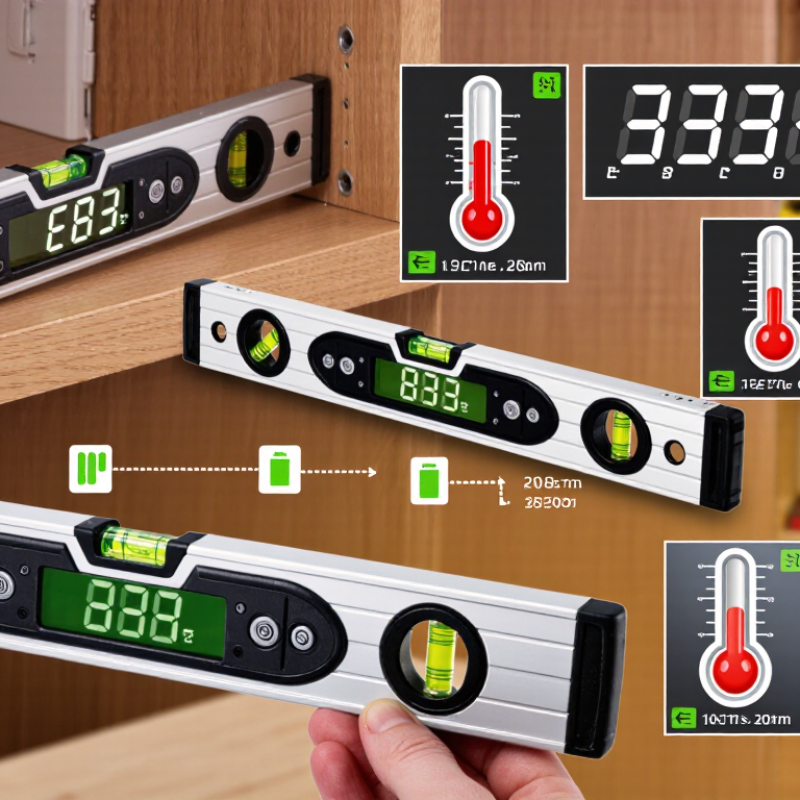
Top Digital Spirit Level for Accurate Measurements?

What Is a Digital Spirit Level?

A digital spirit level is a measuring tool that detects its position against gravity. Instead of relying on a liquid bubble, it uses electronic accelerometer sensors. The screen then shows whether a surface is level, plumb, or tilted. Readings may appear in degrees, percentages, or millimeters per meter. Some models also provide an audible signal when alignment is reached. That small sound can help when both hands are occupied.

Accuracy depends on more than the display. Sensor calibration, temperature, battery condition, and surface contact all matter. NIST Technical Note 1297 explains that a coverage factor of k=2 commonly represents about 95% coverage when conditions are suitable. This is a useful reminder: a displayed number is not automatically an exact truth.

Before measuring, place the tool on a stable reference surface and check its reading in both directions. I have seen small differences appear after a tool was moved from a warm room to a cold site. That detail is easy to miss. ISO 16331-1 also emphasizes controlled field procedures for evaluating measurement performance.

In practice, a digital spirit level works best with repeat checks, clean contact edges, and periodic calibration. Even then, I would not trust one reading blindly. A second position may reveal a hidden error.

How Digital Spirit Levels Measure Angles and Slopes

A digital spirit level converts tilt into an angle or slope through an internal accelerometer. The sensor detects gravity along one or more axes. Software then calculates the surface’s deviation from true horizontal or vertical. The display may show degrees, percent slope, or millimeters per meter.

For example, a 2% slope rises two centimeters over one meter. That is easier to apply on drainage runs, ramps, and cabinet installations. It also reduces mental conversion during fieldwork. Small differences matter.

The McKinsey Global Institute reported that construction productivity grew about 1% annually over two decades, compared with 3.6% in manufacturing. Better measurement cannot solve every productivity problem. It can reduce avoidable layout errors. Professional practice still requires calibration checks, stable contact points, and repeated readings. NIST Technical Note 1297 also stresses that measurement results include uncertainty, not just a displayed number. Temperature can affect sensors. Dust can lift the instrument slightly. Even a careful user may press unevenly. I have found that rotating the level 180 degrees often reveals a hidden setup error. The readings should agree closely. If they do not, stop and investigate.

The most useful digital level is not simply the most sensitive one. It is the one used with disciplined checks, clear reference points, and realistic expectations.

Key Features for Accurate Digital Measurements

Top Digital Spirit Level for Accurate Measurements?

Accurate digital measurements begin with the sensor, not the screen. A reliable level should offer stable resolution, clear calibration, and repeatable readings. Resolution shows the smallest displayed change. Accuracy shows how close that reading is to reality. They are not the same. A display changing by 0.1° can still hide calibration error. Look for automatic temperature compensation, a strong housing, and a readable display from a standing position. Audible alerts also help when your eyes are focused on the workpiece.

NIST Technical Note 1297 explains that measurement uncertainty should include repeatability, calibration, and other influences. It commonly uses a coverage factor of k=2, representing approximately 95% confidence. That principle matters on site. Take several readings, rotate the level 180 degrees, and compare the results. ISO 17123-2 also emphasizes repeated field observations and statistical evaluation for leveling instruments. One reading is weak evidence.

In practical use, I check a digital level against a known flat surface before measuring cabinets, frames, or equipment bases. I record the first value, reverse the tool, and record it again. A difference of 0.2° deserves attention. Dust, battery condition, and uneven contact can distort results. I once trusted a perfectly centered display while the reference surface was slightly bowed. The tool was not entirely at fault. My method was incomplete. Good accuracy comes from capable features, careful handling, and a willingness to question convenient readings.

Top Digital Spirit Level for Accurate Measurements? - Key Features for Accurate Digital Measurements
Key Feature Recommended Specification Typical Measurement Data Accuracy Benefit
Electronic Measurement Accuracy About ±1.7 to ±3.5 mm per metre at level Provides reliable alignment for cabinetry, framing, shelving, and equipment installation.
Measurement Resolution Common angle increments: 0.05° or 0.1° Makes small changes in slope easier to identify and correct.
Measurement Range Level, plumb, and common slope measurements; some models read up to 360° Supports horizontal, vertical, inclined, and full-angle measurements.
Selectable Units Typical slope formats include 0.0°, 0.0%, mm/m, and in/ft Allows readings to match architectural drawings, building standards, and job-site practices.
Digital Display Usually includes angle value, direction arrows, unit indicator, and low-battery symbol Improves readability in dim areas and reduces interpretation errors.
Audible Alignment Alert Many designs provide a continuous or intermittent tone when aligned Enables hands-free positioning when the display is difficult to see.
Calibration Function Common procedures use a 180° flip or two-point calibration Helps compensate for minor changes caused by transport, impact, or temperature.
Automatic Shut-Off The exact delay depends on the instrument design Extends battery life when the tool is left on unintentionally.
Operating Temperature Some professional models support wider ranges, such as approximately -10°C to 50°C Maintains dependable readings across common workshop and construction conditions.
Protection Against Dust and Water Protection ratings vary; IP54 indicates limited dust ingress and water splashes from any direction Reduces the risk of inaccurate readings or damage in dusty and damp environments.
Measuring Surface Longer bodies generally improve stability; common lengths range from approximately 230 mm to 600 mm Creates more consistent contact with the workpiece and reduces rocking during measurement.
Magnetic Base Useful on steel framing, machinery, pipes, and metal structures Keeps the tool positioned during hands-free checks without replacing visual verification.
Battery and Runtime Runtime depends on display brightness, alarm use, and battery capacity Reduces interruptions and helps prevent measurements taken with insufficient power.
Verification Before Use Compare the reading, rotate the tool 180°, and confirm consistent results Detects calibration drift and helps maintain measurement confidence over time.
Best Use Cases Suitable for horizontal, vertical, and slope alignment tasks Combines fast digital feedback with the practical stability of a traditional level body.
Important Limitation Accuracy can be affected by drops, dirt on the base, temperature changes, and weak batteries Encourages proper verification instead of treating every digital reading as laboratory-grade data.

How to Choose the Best Digital Spirit Level

Choosing the best digital spirit level starts with the job, not the brightest screen. In my workshop, I check measuring range, stated accuracy, and resolution before extra features. A level showing 0.1 degrees may still be unsuitable for fine cabinet installation. Look for clear tolerances, stable readings, and simple calibration instructions. A certificate adds confidence, but regular field checks remain necessary. Small errors grow across long shelves.

Keep it practical. For framing, a longer body can reveal gradual slopes more effectively. A compact model fits crowded spaces and narrow corners. Magnetic edges help on steel, but weak magnets can create false confidence. Confirm that the measuring surface is flat and protected from dents.

The display should remain readable from above, below, and at an angle. Audible alerts help in noisy rooms, although I often silence them during careful work.

Battery life, auto shutoff, and water resistance also affect daily reliability. Choose controls that remain usable with dusty or gloved hands. Before trusting a new level, compare it with a verified reference surface. Rotate it 180 degrees and check whether the reading changes. I once skipped this test and corrected a shelf twice. That mistake still influences my buying decisions. Test it yourself.

How to Use and Maintain a Digital Spirit Level

A digital spirit level gives clear readings, but accuracy begins with proper handling. Before measuring, place it on a stable surface and check the display’s zero position. If the reading is not level, rotate the tool 180 degrees and compare both results. A noticeable difference may indicate calibration trouble. Keep it steady.

For wall shelves, cabinets, and frames, press the level gently against the surface without forcing it. Watch the digital indicator until the bubbles or numbers settle. Strong sunlight, vibration, and sudden temperature changes can affect readings. I usually wait a few seconds before marking the position. Small errors matter. Measuring from different points also helps reveal an uneven wall.

Maintenance is simple but easy to neglect. Wipe the measuring edges with a soft, dry cloth after dusty work. Remove grit before storing the tool, because tiny particles can create gaps against a surface. Check the battery when the display becomes dim or slow. Store the level in a protective case, away from moisture and heavy tools. Avoid dropping it, even onto a workshop mat. I once trusted a damaged level because its screen still worked, and the shelf tilted slightly. That mistake reminded me to inspect the housing and repeat doubtful measurements rather than assume the first result is correct.

Top Digital Spirit Level for Accurate Measurements?

How to Use and Maintain a Digital Spirit Level

The chart shows the vertical deviation produced by different angle readings over a 1-meter distance. Values are calculated using the trigonometric relationship deviation = tan(angle) × distance. For accurate measurements, place the level on a clean surface, wait for the reading to stabilize, and check calibration regularly. Store it dry, protect the sensor and display from impact, and replace the batteries when readings become inconsistent.