2026 Top Types of Metal Cladding Sheets for Global Buyers
Global buyers are examining Metal Cladding Sheets more carefully in 2026. Energy performance, fire behavior, corrosion resistance, and installation speed now influence purchasing decisions. A sheet that looks excellent on a showroom wall may perform poorly beside a coastal road. Salt air is unforgiving.
Dr. Michael F. Ashby, a leading materials-selection expert, stated, “Materials are the stuff of design.” His point remains practical for architects, contractors, and distributors. Choosing aluminum, galvanized steel, stainless steel, zinc, copper, or composite-faced sheets requires more than comparing prices. Buyers should review coating thickness, substrate grade, thermal movement, drainage details, warranty terms, and verified test reports. Supplier experience matters too. Ask for project references, installation guidance, and documentation that matches the intended market.
No single sheet wins every project. That is easy to forget. Aluminum offers low weight and strong corrosion resistance, while steel often provides stiffness and cost efficiency. Stainless steel supports demanding environments, but its higher price needs justification. Zinc and copper develop distinctive surfaces over time, although color changes may surprise inexperienced buyers. Composite systems can improve visual consistency, yet their core classification and fire documentation deserve close attention.
This guide compares the top types of Metal Cladding Sheets for global buyers. It focuses on real selection pressures: climate, building height, maintenance access, supply reliability, and lifecycle value. Some recommendations remain conditional. Product availability changes. Local approvals differ. Even experienced teams can miss a small detail, such as incompatible fasteners or inadequate expansion joints. Careful evaluation is not glamorous, but it prevents expensive corrections after installation.
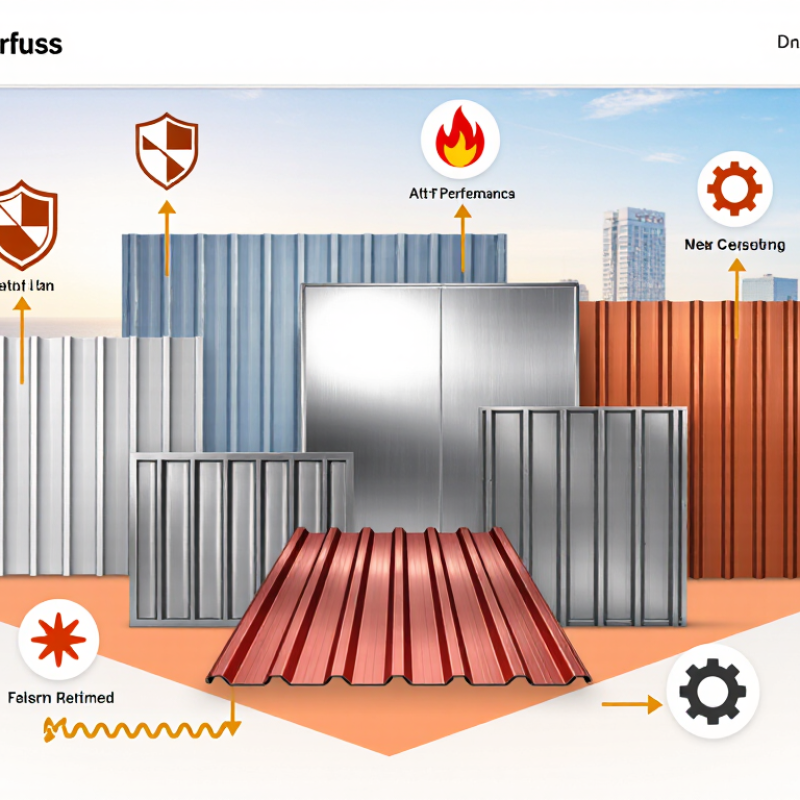
What Metal Cladding Sheets Are and Why They Matter in 2026
Metal cladding sheets are protective outer layers fixed over walls, roofs, or insulated panels. Common choices include galvanized steel, aluminum, zinc, copper, and stainless steel. They control rain, sunlight, wind, and surface damage. They also shape a building’s appearance. In 2026, buyers must assess more than color and price. The UNEP and GlobalABC 2023 report states that buildings consume about 34% of global energy and create around 37% of energy-related emissions. Better cladding can support insulation performance, but it cannot repair poor detailing.
Material selection requires evidence. The World Steel Association’s October 2024 outlook projected global steel demand growth in 2025, showing continued pressure on supply planning and costs. Aluminum remains attractive where low weight and corrosion resistance matter. The International Aluminium Institute reports that recycled aluminum requires roughly 5% of the energy used for primary production. That figure is useful, though actual savings depend on collection and processing systems. Galvanized steel often suits industrial walls, while zinc and copper offer distinctive weathering. Stainless steel performs well in harsh or humid environments, but its higher cost needs justification.
Tips: Ask for coating thickness, alloy grade, fire classification, warranty terms, and test reports. Check fasteners, joints, drainage paths, and thermal bridges together. A beautiful sheet can still fail around one careless seam. Buyers should compare lifecycle cost, not only the first quotation. Some decisions remain uncertain, especially when local climate data is incomplete. That deserves review, not optimistic guessing.
How Metal Cladding Sheets Are Classified by Material and Structure
2026 Top Types of Metal Cladding Sheets for Global Buyers
Metal cladding sheets are classified by both material and structure. Aluminum sheets are lightweight, corrosion-resistant, and suitable for coastal façades when properly finished. Galvanized or zinc-coated steel offers higher stiffness and usually costs less. Stainless steel supports demanding hygiene or industrial applications. Copper and zinc develop distinctive natural surfaces, but their appearance changes over time. That change is not always predictable.
Structure changes performance significantly. Single-skin panels suit simple enclosures and ventilated rainscreen systems. Insulated sandwich panels combine outer metal skins with mineral wool or polymer foam cores. They improve thermal control and speed installation. Corrugated and trapezoidal sheets add strength through formed profiles. Flat cassette panels create clean façade lines, while perforated sheets provide shading and airflow. Small details matter.
A buyer should check coating thickness, substrate grade, panel weight, joint design, and drainage paths. For insulated products, review the core density, fire test data, thermal conductivity, and moisture resistance. A beautiful panel can still fail at poorly sealed edges. I have seen specifications focus on color while ignoring movement joints and fastener compatibility. That is a costly oversight. Local wind loads, temperature changes, and fire requirements must be verified with qualified engineers before procurement.
2026 Top Types of Metal Cladding Sheets for Global Buyers
How metal cladding sheets are classified by material and structure
Single-Skin Sheets Profiled or flat metal sheets used as external weather barriers, often installed over a supporting frame with separate insulation.
Insulated Sandwich Panels Two metal facings bonded to a rigid insulation core, combining cladding, thermal insulation and rapid installation.
Cassette and Rainscreen Systems Folded or formed panels mounted on rails, typically creating a drained and ventilated cavity behind the outer skin.
Chart metric: representative density at room temperature. Values are common engineering reference values and may vary with alloy, temper, coating and manufacturing specification.
Key Types of Metal Cladding Sheets for Global Building Projects
Metal cladding sheets serve different roles in global building projects, from weather protection to visual identity. Aluminum sheets are lightweight, corrosion resistant, and suitable for coastal facades. Steel sheets provide strong impact resistance for warehouses, transport hubs, and industrial buildings. Stainless steel offers long service life where moisture, chemicals, or frequent cleaning are expected. Zinc and copper develop distinctive surface changes over time, which some architects value.
Material selection should begin with the building’s exposure, structure, and maintenance plan. In project reviews, I check wind loads, panel thickness, joint design, insulation, and drainage paths. A beautiful sheet can still fail when water remains behind the panel. Thermal movement also matters, especially on long elevations with dark finishes. Local fabrication capacity and replacement availability deserve equal attention. Imported materials may create delays when one damaged panel needs matching.
No sheet is perfect. Thin aluminum can dent during handling. Coated steel may require careful edge protection. Copper can stain nearby surfaces during early weathering. These weaknesses are manageable, but only with accurate detailing and trained installation teams. Buyers should request test data, coating information, fire performance documentation, and clear tolerances before ordering. A small sample panel exposed outdoors can reveal color shifts, joint behavior, and cleaning needs better than a brochure. Project conditions vary, so a specification copied from another country may need thoughtful revision.
How to Compare Performance, Appearance, Cost, and Sustainability
For global buyers, metal cladding should be compared as a complete facade system, not by sheet price alone. Aluminum is lightweight and corrosion resistant, while steel usually offers greater stiffness and impact strength. Zinc and copper create distinctive patinas, but changing colors may not suit every building. Coated steel provides broad color choices and predictable appearance. Check substrate grade, coating thickness, fire performance, and wind-load data before selection. Ask for tested values.
Appearance requires more than a small sample. View panels in daylight, shade, and rainy conditions. Gloss, texture, joint width, and fastener placement can change the facade’s visual quality. Confirm color consistency between production batches. Slight variation happens. That matters on large elevations. Ventilated systems may improve moisture management and installation tolerance, but their rails and labor increase project cost.
A reliable cost comparison includes fabrication, transport, substructure, installation, cleaning, repairs, and expected service life. Sustainability should cover recycled content, recyclability, coating chemistry, embodied carbon, and independently verified environmental data. A low-carbon claim can sound impressive, yet long transport or early replacement may change the outcome. Local material availability often matters more than buyers expect. The cheapest sheet is not always the least expensive facade. A stronger specification may reduce maintenance, though the forecast can still be wrong when workmanship is poor or weather exposure is underestimated.
How Global Buyers Can Select the Right Metal Cladding Sheet
Global buyers need more than a shiny surface when choosing metal cladding sheets. The right panel must suit climate, structure, fire strategy, and installation practice. Aluminum resists coastal corrosion and reduces weight. Galvanized steel offers stiffness and often lower initial cost. Zinc develops a protective patina, while copper changes color noticeably over time. Each option behaves differently under heat, impact, and maintenance routines. Looks can mislead.
Start with the building location. Record salt exposure, humidity, freeze-thaw cycles, wind pressure, and temperature range. Then confirm the substrate, support spacing, joint design, and drainage path. A 0.7-millimeter steel sheet may perform well on one façade but feel inadequate on another. Ask for coating thickness, alloy grade, tensile data, fire classification, and corrosion test results. Request current inspection reports, not only sales samples. Samples show appearance; they rarely reveal edge treatment or fastener compatibility.
During supplier evaluation, compare the complete installed system. Check panel thickness, backing materials, clips, sealants, screws, and replacement access. Poor details often cause more trouble than poor metal. I have seen attractive façades stain because cut edges were left unprotected. That failure is preventable, but not always cheap. Buyers should review technical drawings with a local engineer and allow for thermal movement. Delivery packaging matters too; damp wrapping can mark sheets before installation. No choice is perfect. Document the trade-offs, then test a small façade mock-up before approving full production.
